

What if the organic kale and pasture-raised eggs in your diet are actually the hidden drivers of your daily bloating and fatigue? You've likely spent months eating clean while still battling systemic inflammation and digestive distress. It's frustrating to feel like your body is working against you despite your best efforts. Our clinical food sensitivity testing identifies the specific IgG immune responses that standard IgE allergy tests often miss. This professional approach moves beyond the 40 percent inaccuracy rate found in many retail at-home kits, providing you with a reliable, data-driven map of your unique biology.
You deserve a clear answer that ends the guesswork and stops the waste of resources on ineffective solutions. This guide will show you how to evaluate comprehensive clinical panels and find the most accurate diagnostic roadmap for your gut health in Oregon. We will break down how professional data interpretation identifies your exact trigger foods so you can reduce inflammation and begin your journey toward lasting wellness. You're about to discover the difference between managing symptoms and addressing the root-cause of your discomfort through precise lifestyle medicine.
Key Takeaways
- Learn to distinguish between immediate IgE allergies and delayed IgG immune responses to uncover the root-cause of persistent inflammatory symptoms.
- Compare the clinical reliability of serum blood panels against alternative methods like hair analysis to ensure your diagnostic tools provide scientifically valid data.
- Navigate Oregon-specific regulations to identify qualified naturopathic physicians in the Portland-metro area authorized to order professional food sensitivity testing.
- Understand the strategic application of a clinical Rotation Diet versus total elimination to implement a personalized and sustainable healing plan.
- Discover how comprehensive diagnostic panels integrate into a broader root-cause journey, combining lifestyle medicine with targeted nutritional interventions.
Understanding Food Sensitivity Testing and Its Role in Chronic Health
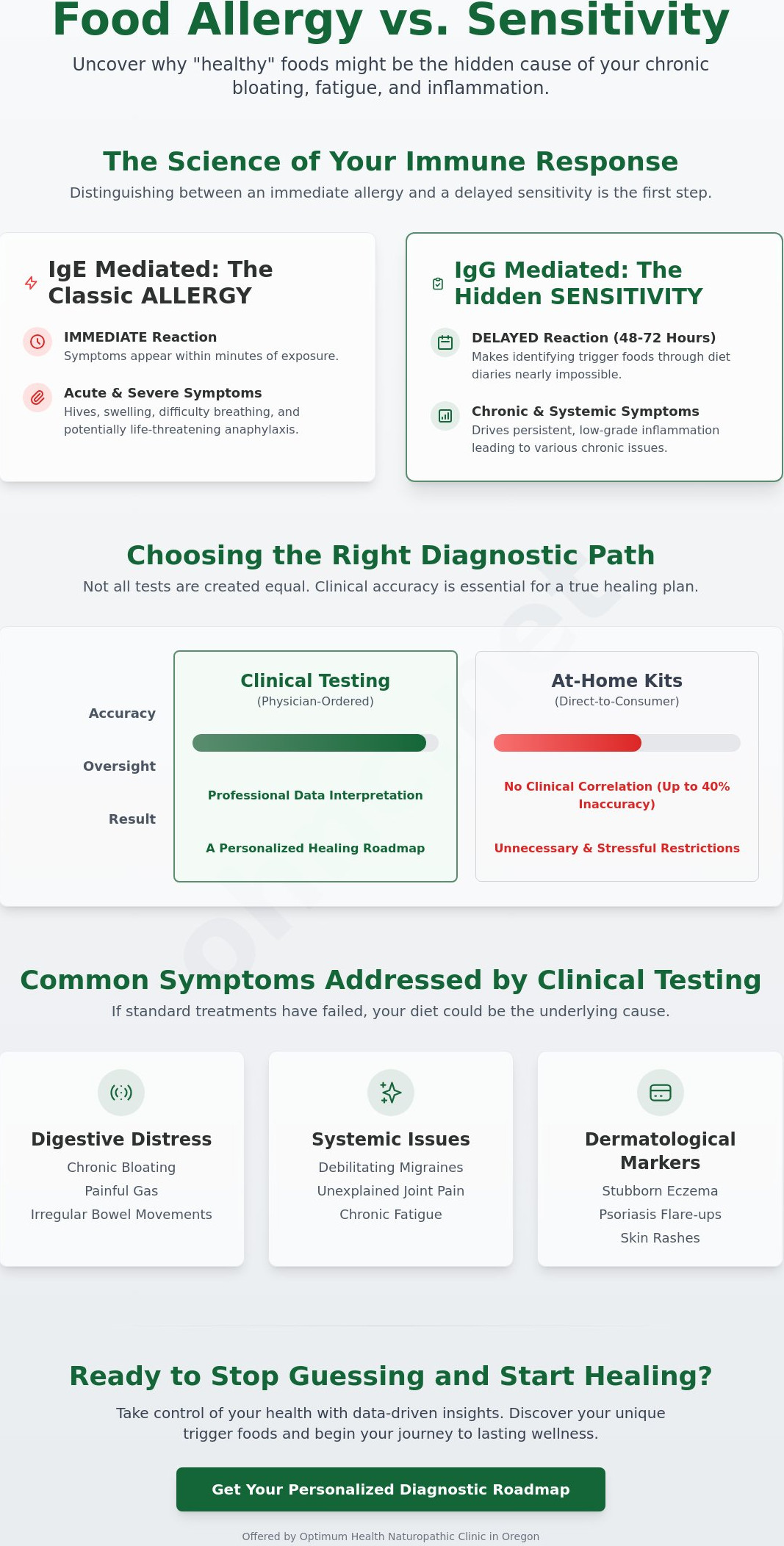
Food sensitivity testing serves as a vital tool for identifying the root-cause of persistent, unexplained health struggles. Unlike an acute IgE-mediated allergy that triggers immediate hives or anaphylaxis, sensitivities involve a delayed IgG antibody response. This specific immune reaction often takes 48 to 72 hours to manifest, which makes it nearly impossible for patients to identify triggers through a simple food diary. It's also fundamentally different from a Food intolerance, which typically results from an enzyme deficiency rather than an active immune system flare-up.
To better understand how these tests differ and what the results actually mean for your health, watch this helpful video:
In Oregon, we see a high prevalence of patients who feel unheard by conventional healthcare systems. Clinical estimates suggest that up to 20% of individuals may be living with undiagnosed food sensitivities. When you continue to consume reactive foods, your body remains in a state of systemic inflammation. Over time, this chronic activation compromises gut permeability, often referred to as "leaky gut." This allows undigested particles to enter the bloodstream, which further exhausts the immune system and prevents you from reaching optimum health.
Common Symptoms Addressed by Clinical Testing
Patients often begin their journey toward healing because of symptoms that don't respond to standard treatments. Clinical-grade food sensitivity testing can provide answers for various concerns:
- Digestive distress: Chronic bloating, painful gas, and irregular bowel movements that persist despite "eating clean."
- Systemic issues: Debilitating migraines, unexplained joint pain, and the heavy exhaustion associated with chronic fatigue syndrome.
- Dermatological markers: Stubborn eczema, psoriasis flare-ups, and skin rashes that appear without a clear external cause.
Why Generic At-Home Kits Often Fail
While retail mail-in kits are widely available, they often lack the rigorous clinical-grade laboratory standards required for a transformative treatment plan. Many of these kits produce "false positives" for foods you eat frequently, which can lead to unnecessarily restrictive diets that cause more stress than healing. Oregon residents should prioritize physician-ordered panels over retail products. A provider-led approach ensures that your data is correlated with your specific medical history and lifestyle. This professional oversight turns a list of data points into a personalized roadmap, allowing you to address the root-cause of your symptoms with confidence and scientific accuracy.
The Science of the Immune Response: IgE vs. IgG vs. IgA
Understanding how your body reacts to food requires looking at different branches of the immune system. IgE antibodies trigger immediate, acute reactions. These are the life-threatening responses, like anaphylaxis from peanuts, that require emergency intervention. For a detailed clinical overview of food allergies and their specific pathways, medical literature distinguishes these from delayed reactions. IgG antibodies are the primary markers we use for food sensitivity testing. They identify a slower, inflammatory response that doesn't show up immediately. We also look at IgA, which provides insight into mucosal immunity. Since 70% of your immune system resides in the gut, IgA levels help us understand if the intestinal barrier is compromised.
The Mechanism of Delayed Hypersensitivity
Sensitivities don't act like typical allergies. Symptoms often emerge within a 12 to 72-hour window after consumption. This delay makes it nearly impossible to identify triggers without clinical data. Your immune system creates a memory of specific proteins found in local food sources, treating them as invaders. When the intestinal lining is irritated or permeable, these proteins cross into the bloodstream, triggering a systemic IgG response. This leads to chronic issues like migraines, joint pain, or bloating that persist long after the meal is over. Identifying these triggers is the first step in quieting that systemic inflammation.
Clinical Validity and Laboratory Standards
We utilize CLIA-certified laboratories to ensure every panel meets rigorous diagnostic accuracy standards. High-level clinical oversight is vital because it prevents the trap of unnecessary, restrictive dieting. Simply cutting out dozens of foods can lead to nutrient deficiencies. Instead, we correlate your food sensitivity testing results with a naturopathic primary care assessment. This investigative approach ensures we treat the person, not just the lab report. The goal is to build a sustainable nutrition plan that supports healing rather than just managing symptoms. You can connect with a provider to review how these markers align with your specific health history and goals.
Comparing Methodologies: Blood Panels vs. Alternative Testing
Choosing the right methodology for food sensitivity testing is a critical step in your healing journey. At Optimum Health Naturopathic Clinic, we prioritize diagnostic tools that offer clinical validity and reproducible results. While the market is flooded with various home kits, not all technologies provide the same level of insight into your immune system. We focus on identifying the root-cause of your symptoms through evidence-based science.
Serum-Based IgG Testing
This method involves a standard blood draw to measure specific immunoglobulin G (IgG) antibody titers. It's the most reliable way to identify delayed immune responses that occur hours or days after eating. Serum testing offers high reproducibility. This means your results remain consistent across different samples. For the most accurate data, you must have consumed the specific foods within 21 to 28 days of the blood draw. This ensures your immune system has had a recent opportunity to produce measurable antibodies. It's a direct, quantifiable measurement of immune activity.
We often compare standard IgG panels with the ALCAT test. ALCAT measures leukocyte activation by observing changes in white blood cell size and count. While ALCAT provides an interesting snapshot of cellular reactivity, IgG panels focus on the direct measurement of antibodies. Clinical data suggests that IgG testing provides a more stable baseline for long-term dietary planning. It targets the underlying inflammatory triggers by identifying the specific proteins your immune system is flagging. The science is clear. Blood-based antibody testing remains the clinical gold standard for our practice in Oregon.
The Problem with Hair and Bio-Resonance Testing
Hair analysis is frequently marketed for food sensitivity testing, but it lacks the necessary clinical foundation for immune assessment. Hair follicles store mineral data and heavy metal exposure over several months. They don't contain the active antibodies or white blood cells required to diagnose a food sensitivity. Bio-resonance testing relies on electromagnetic frequencies. This method currently lacks peer-reviewed evidence in major medical journals. Because these methods don't measure active immune markers, they're excluded from professional clinical practice at our clinic. We believe in transparency and reliability.
Deciding between a 96-food panel and a 184-food panel depends on your unique lifestyle and symptoms. The 96-food panel covers common dietary staples like dairy, wheat, and eggs. However, the 184-food panel provides a superior cost-to-value ratio for patients with complex, multi-system symptoms. This comprehensive panel includes:
- Alternative grains and legumes.
- Specific spices and seasonings.
- Diverse protein sources often overlooked in smaller tests.
- Common botanical ingredients.
Expanding the scope of testing helps prevent hidden triggers from stalling your progress. This thorough, investigative approach ensures your personalized nutrition plan is built on a complete data set. We're here to help you navigate these complexities. Begin your journey with data you can trust.
Navigating Food Sensitivity Services in Oregon
Oregon’s healthcare landscape is unique. Oregon state law, specifically ORS 685, empowers naturopathic physicians with the authority to act as primary care providers. This means your physician can order and interpret advanced food sensitivity testing without the administrative hurdles often found in other states. When you seek care in the Portland-metro or Hillsboro area, it's vital to choose a clinic that utilizes these diagnostic privileges to find the root-cause of your symptoms rather than just offering temporary relief.
Insurance billing for diagnostic testing in Oregon depends on your specific plan. Most major carriers in the state, such as Regence BlueCross BlueShield and Providence Health Plan, typically process claims for clinical labs ordered by our providers. We provide transparent coding and documentation to help you maximize your benefits. Beyond the initial test, we emphasize the importance of local follow-up care. Long-term dietary modification is a complex process; having a local team to monitor your progress ensures you maintain nutritional balance while your gut heals.
What to Look for in an Oregon Naturopathic Clinic
Effective care goes beyond a simple lab report. You should prioritize physician-led testing protocols rather than "test-only" commercial services that lack clinical oversight. A high-quality clinic integrates your results with other essential diagnostics, such as hormone panels or methylation analysis, to see how your body manages systemic inflammation. We also provide localized support for finding Oregon-grown alternative ingredients. Whether it’s sourcing local hazelnut flour or seasonal produce from the Willamette Valley, we make sure your new lifestyle is sustainable and accessible.
The Diagnostic Process at OHNC
Your path to wellness starts with a detailed initial consultation to map your symptoms and determine the appropriate panel size. This targeted approach prevents unnecessary testing while ensuring no triggers are overlooked. Clinical food sensitivity testing at OHNC is tailored to the individual’s unique inflammatory profile. For your convenience, we offer on-site blood draws or can coordinate with referral labs if you're traveling from outside Hillsboro. We don't just hand you a list of restricted foods. We build a partnership to help you understand your results and implement lasting changes.
Ready to identify the triggers behind your symptoms and reclaim your vitality? Begin your journey with a personalized clinical consultation at OHNC.
Beyond the Results: Implementing a Root-Cause Healing Plan
Receiving your food sensitivity testing results marks the end of the diagnostic phase and the beginning of active lifestyle medicine. We don't just hand you a list of forbidden foods; we build a clinical strategy to restore your mucosal barrier. For patients with 3+ or 4+ reactivity scores, a total elimination strategy for 90 to 180 days is often necessary to dampen systemic inflammation. For lower-level sensitivities, we utilize a Rotation Diet. This service ensures you don't develop new sensitivities by cycling specific food families every four days. This specific timing prevents the immune system from becoming over-sensitized to a single protein source while you heal.
Our clinical approach centers on the 5R protocol: Remove, Replace, Reinnoculate, Repair, and Retain. Once the triggers are identified via food sensitivity testing, we move to replace digestive enzymes and reinnoculate the microbiome with targeted probiotics. This root-cause journey transforms raw data into a functional recovery plan that heals the gut lining rather than just avoiding symptoms indefinitely. It's a transition from simply collecting data to practicing proactive, personalized medicine. To further support your body's natural detoxification pathways during this process, click here to learn about the benefits of castor oil from ah! fertility nutrition.
Interpreting Your Food Sensitivity Panel
Your report uses a 1+ to 4+ scale to quantify your IgG or IgA antibody response. A 4+ reaction indicates a high level of immune activity, necessitating immediate removal from your diet for a minimum of three months. We also analyze cross-reactive foods. For instance, if you react to ragweed, your body might misidentify melons or bananas as threats due to similar protein structures. Prioritizing the removal of high-reactivity triggers first allows your immune system to exit a state of constant high alert. This process often reduces the sensitivity of lower-rated items over time as your systemic inflammation subsides.
The OHNC Advantage: Holistic Integration
We integrate your sensitivity data directly into our naturopathic primary care model to ensure every facet of your health is addressed. This isn't a standalone test; it's a component of a comprehensive wellness strategy. To support your recovery, we offer specialized services like IV nutrient therapy to bypass a compromised gut and deliver vitamins directly to your cells. Additionally, therapeutic massage helps reduce the systemic stress that often exacerbates digestive distress. Begin your journey toward gut health with a professional diagnostic assessment at our Portland clinic today.
Begin Your Journey Toward Root-Cause Healing
Navigating your health doesn't have to be a guessing game. By utilizing clinical-grade food sensitivity testing, you move beyond temporary symptom management and into the realm of precise, data-driven wellness. At Optimum Health Naturopathic Clinic, we provide comprehensive panels through CLIA-certified laboratories to identify specific immune responses like IgG and IgA. This isn't just about a list of foods to avoid; it's about understanding how your body interacts with your unique lifestyle and nutrition.
Dr. Jason Black, ND, brings over 20 years of clinical experience to every patient interaction. He ensures that your lab results translate into a personalized root-cause treatment plan designed for sustainable recovery. You deserve a partner who investigates your health with scientific curiosity and empathetic expertise. Our clinic combines advanced medical diagnostics with a supportive atmosphere to ensure you never feel unheard in your pursuit of wellness. Your path to feeling better starts with professional insight and a dedicated commitment to holistic care.
Schedule your food sensitivity consultation at OHNC to take the first step toward reclaiming your health. We're ready to help you rediscover your vitality and achieve the optimum health you deserve.
Frequently Asked Questions
Is food sensitivity testing the same as an allergy test?
No, food sensitivity testing is not the same as an allergy test. Allergy tests measure IgE antibodies which trigger immediate, often severe reactions like hives or anaphylaxis. In contrast, sensitivity testing measures IgG antibodies that cause delayed inflammatory responses. These reactions can take up to 72 hours to appear, making them difficult to identify without a professional clinical panel.
How much does food sensitivity testing cost in Oregon?
Costs for these clinical panels in Oregon typically range from $200 to $600 depending on the specific lab and the number of antigens analyzed. While we don't set these external lab fees, 2023 industry reports show that comprehensive 184-antigen panels fall within this pricing bracket. We prioritize transparency and help you understand the value of each panel before you begin your journey.
Can food sensitivity testing help with weight loss?
Food sensitivity testing can support weight loss by identifying specific foods that trigger systemic inflammation and metabolic dysfunction. When you consume reactive foods, your body may experience water retention or insulin resistance. A 2021 clinical study showed that participants who removed IgG-reactive foods lost an average of 5.5 pounds more than the control group over a 90-day period.
What is the most accurate food sensitivity test available?
The most accurate method involves a combination of CLIA-certified ELISA testing and a supervised elimination diet. We use clinical panels that screen for 180 or more specific antigens to ensure high sensitivity and specificity. This thoroughness allows us to identify the root-cause of your symptoms rather than just managing the surface-level discomfort you might feel on a daily basis.
Does health insurance cover IgG food sensitivity testing?
Insurance coverage for IgG testing varies significantly between different providers and individual policies. Some Oregon insurers may cover the lab work if it's deemed medically necessary, while others consider it an out-of-pocket wellness expense. We recommend calling your member services department with specific CPT codes to confirm your benefits before you schedule your blood draw at our clinic.
How long do I have to wait for food sensitivity test results?
You'll typically receive your comprehensive results within 10 to 14 business days after the lab receives your sample. This timeframe allows the technicians to perform a precise analysis of your immune response to various food proteins. Once the results are ready, we'll guide you through the report to create a personalized lifestyle and nutrition plan that fits your needs.
What happens if I test positive for many different foods?
Testing positive for 15 or more foods often points to intestinal permeability, commonly known as leaky gut. We don't simply tell you to stop eating every food on the list; instead, we implement a 30-day gut-repair protocol to strengthen your intestinal lining. This investigative approach ensures we treat the underlying cause so you can eventually enjoy a diverse, nutrient-dense diet again.
Can my child get food sensitivity testing at OHNC?
Children can certainly receive food sensitivity testing at our clinic to help manage chronic conditions like skin rashes or digestive upset. We offer specialized pediatric panels that require smaller blood volumes and focus on common childhood dietary staples. Our team provides a supportive and compassionate environment to make the experience stress-free for both you and your child during the process.
Disclaimer
for educational purposes only