
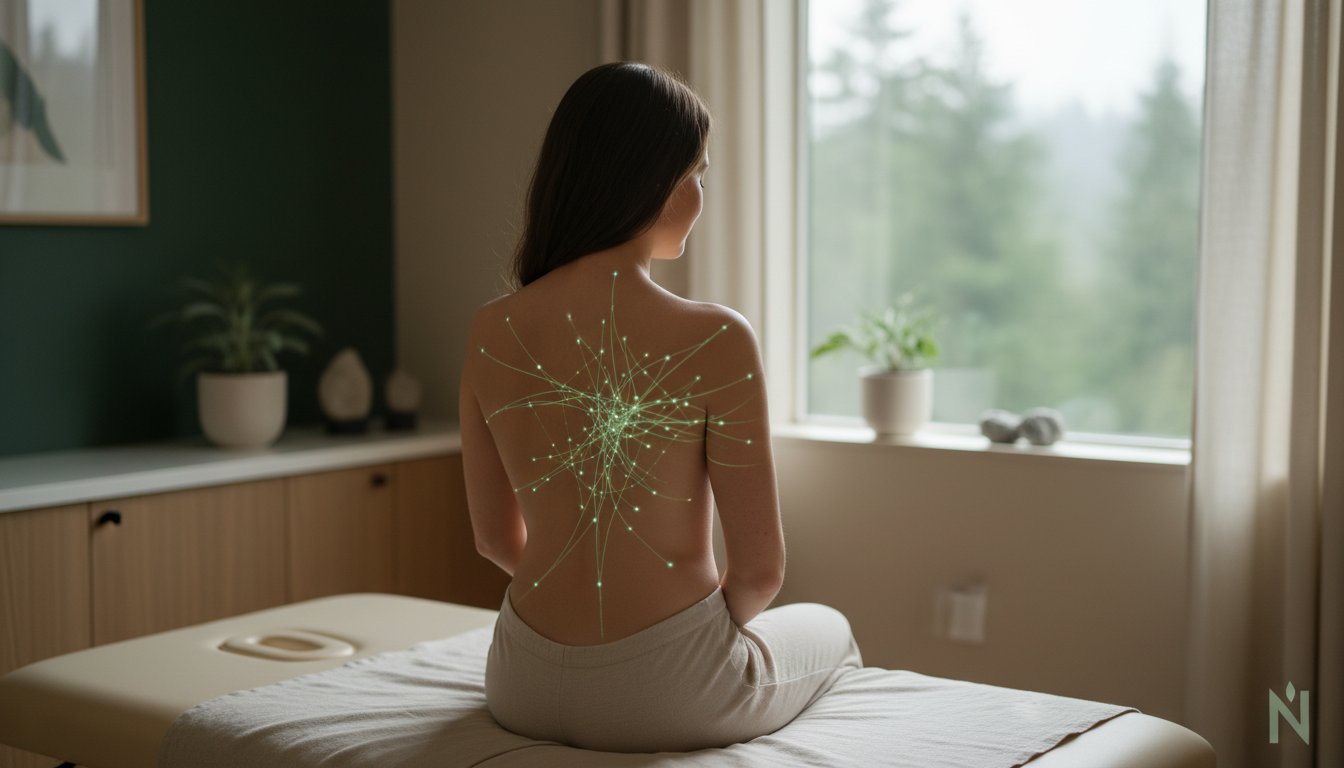
What if the source of your chronic back pain is completely invisible to an X-ray or MRI? You probably feel stuck in a body that refuses to loosen up, experiencing a deep ache that won't budge regardless of how much you rest. It's frustrating to live with a "tight" spine while being told by clinical results that everything looks fine. If you're seeking myofascial release for back pain Hillsboro, you already know that your pain is real, even when it doesn't show up on a screen. You deserve a clinical partner who looks beyond the bone to the complex web of tissue holding you together.
Dr. Boamah provides a deep-dive investigative approach that addresses the root causes of your discomfort rather than just masking the symptoms. In this article, you'll discover how specialized therapy can release the hidden fascial restrictions that limit your daily life. We will explore the science of lasting relief and how this holistic path finally restores your natural range of motion. It's time to move past surface-level management and begin a collaborative journey toward true physical freedom.
Key Takeaways
- Identify why common diagnostic tools often miss the fascial restrictions that contribute to chronic, aching discomfort and a feeling of being "stuck."
- Learn how Dr. Boamah’s investigative methodology bridges the gap between physical medicine and naturopathic care for a comprehensive, whole-body solution.
- Discover the specific benefits of myofascial release for back pain Hillsboro, focusing on long-term structural restoration over temporary symptom masking.
- Understand the role of the fascial system as a supportive three-dimensional web and how poor posture or inflammation causes it to lose essential elasticity.
- Gain insight into how a personalized treatment plan integrates clinical expertise with lifestyle-focused healing to reclaim your mobility and daily comfort.
Why Chronic Back Pain Persists Despite Standard Treatments
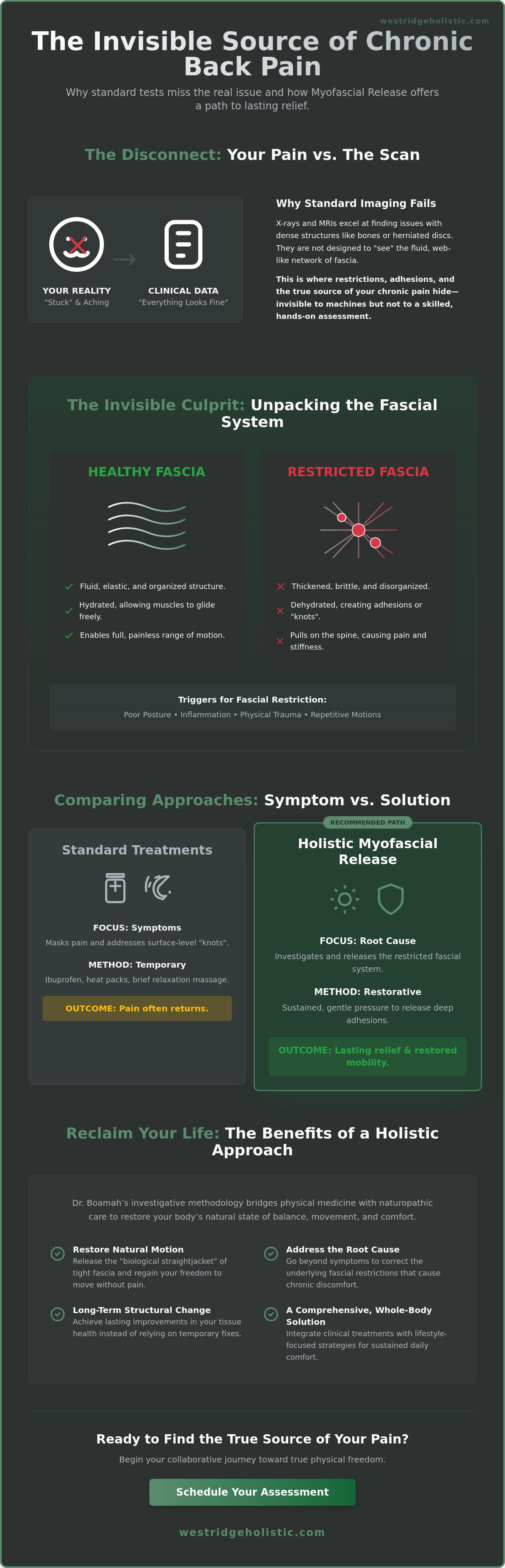
Living with back pain is exhausting, especially when you've already tried the standard rotation of rest and heat. Many people in Hillsboro visit their doctor only to be told their X-rays and MRIs are "normal." This creates a distressing disconnect between your daily reality and clinical data. If you feel a deep, burning ache or a sense of being "stuck" in your own skin, you're likely dealing with Myofascial Pain Syndrome. This condition involves the connective tissue that wraps around every muscle, and it's a primary reason why standard treatments often fail. While some practitioners focus solely on trigger points, these "knots" often return because the surrounding fascial environment remains restricted.
Surface-level solutions like ibuprofen or a quick Swedish massage only address the symptoms. They don't reach the underlying tension. To truly find relief, you need an investigative approach that prioritizes Understanding Fascia and how it impacts your mobility. When this tissue becomes dehydrated or scarred, it acts like a biological straightjacket for your spine. It pulls on your vertebrae and limits your breath, creating a cycle of tension that won't resolve with pills alone.
To better understand the difference between standard stretching and targeted release, watch this helpful video:
The Frustration of Normal Imaging
Standard medical imaging is designed to find broken bones, herniated discs, or tumors. It's excellent for structural emergencies but notoriously poor at visualizing soft tissue tension. Fascia is a fluid, three-dimensional web. Because it doesn't have the density of bone, it remains invisible on most scans. This lack of "proof" often takes a psychological toll, making patients feel like their pain is "all in their head." It's not. It simply requires a hands-on, investigative physical assessment to feel the restrictions that a machine cannot see. Without this deep-dive approach, the true culprit remains hidden.
When "Just a Muscle Pull" Becomes Chronic
An acute muscle strain usually heals within a few weeks with rest. However, if your pain has lingered for months, it's no longer just a pull. In Hillsboro, we see this frequently among desk-bound professionals at major tech hubs or active residents who spend weekends gardening. These repetitive motions cause fascial adhesions. Seeking myofascial release for back pain Hillsboro is about addressing these long-term changes in your tissue. Unlike a simple knot, these adhesions create a ripple effect throughout the body. Without a holistic intervention, your body continues to compensate, leading to hip or neck issues that stem from the same original restriction.
Understanding Fascia: The Invisible Source of Back Pain
Fascia is much more than a simple wrapping for your muscles. It is a sophisticated, three-dimensional web of connective tissue that supports every organ, nerve, and blood vessel in your body. In a healthy state, this tissue is fluid and elastic, allowing your muscles to glide past one another without friction. However, when you experience physical trauma, chronic poor posture, or systemic inflammation, this fluid system begins to thicken. Effective myofascial release for back pain Hillsboro recognizes that this thickening isn't just local. It affects the entire mechanical chain of your body, creating tension in areas you might not expect.
Maintaining this elasticity depends heavily on cellular hydration and metabolic health. Fascia is primarily composed of water and collagen. When you're dehydrated or your body is in a state of chronic stress, the ground substance of your fascia becomes viscous. It loses its ability to lubricate your movements. This is why Dr. Boamah utilizes an investigative approach to care. We don't just look at where it hurts. We look at how your entire fascial system is communicating. You can explore how this fits into a broader health strategy by learning more about naturopathic primary care and how it supports tissue recovery.
The Fascial Web and Referred Pain
Think of your fascia like a finely knit wool sweater. If you pull a thread at the bottom hem, you'll see the tension travel all the way up to the shoulder. This is exactly how fascial tension works in the human body. A restriction in your hip or even an old injury in your foot can create a "snag" that pulls on the tissues of your lower back. This is why treating the site of pain alone often leads to treatment failure. If a practitioner only rubs the area that hurts, they're ignoring the source of the pull. True relief requires finding the origin of the snag. According to experts, Myofascial Release for Back Pain involves applying gentle, sustained pressure to these restricted areas to eliminate pain and restore motion.
The Science of Myofascial Restrictions
Under chronic stress, fascia undergoes a "gel-to-solid" transition. This process, known as thixotropy, causes the normally fluid tissue to become rigid and unyielding. As these tissues solidify, they begin to compress the sensitive nerves and blood vessels that travel through the back. This compression leads to the deep, aching sensation that rest won't fix. Fascial adhesions are collagenous glue that limits movement. Once these adhesions form, they require specific, sustained pressure to melt back into a fluid state. This transformation is the key to unlocking the biological straightjacket that keeps you from living an active, pain-free life.
Dr. Boamah’s Holistic Approach to Myofascial Release in Hillsboro
Dr. Boamah stands as a dedicated guide for those navigating the complexities of chronic pain. He bridges the gap between traditional physical medicine and naturopathic philosophy. Most clinical settings offer a one-size-fits-all approach, but at Westridge Holistic medicine, your care is highly individualized. He approaches every case with genuine curiosity, treating your health as an evolving process. For residents seeking myofascial release for back pain Hillsboro, this means having a clinical partner who is as invested in your recovery as you are. He moves beyond temporary management to foster long-term healing and restored mobility.
The personality of the clinic is one of intelligent empathy. We don't just react to your symptoms; we proactively look for ways to promote your peak well-being. Dr. Boamah views your back pain as a complex puzzle that requires a deep-dive investigation. By combining clinical authority with a warm, supportive atmosphere, he ensures that your path to engagement is clear and uncomplicated. This collaborative spirit is what allows for true, structural change in the body.
The Investigative Physical Assessment
Your first visit serves as a welcoming gateway to a new level of physical freedom. The initial consultation is a deep-dive into your biological history and current physical state. Dr. Boamah identifies trigger points through skilled palpation, feeling for the subtle changes in tissue density that machines often miss. He doesn't just focus on the spine. He examines how your gait, shoulder height, and hip level interact to create tension. This investigative physical assessment is the foundation of your recovery. It informs a personalized holistic physical therapy plan that evolves as your body begins to heal.
What to Expect During Your MFR Session
When you enter the treatment room, the atmosphere is professional yet welcoming. You'll experience manual techniques that prioritize sustained, gentle pressure into fascial barriers. This is not a standard massage. We don't use oils or creams because they cause the hands to glide over the skin rather than engaging the fascia. By maintaining direct traction, Dr. Boamah can help the tissue transition from a solid, "glued" state back to a fluid one. His expertise in myofascial release for back pain Hillsboro allows him to target the hidden restrictions that limit your life.
This therapy is a proven method for addressing localized pain, according to the Mayo Clinic. You can expect a steady, logical progression during each visit. The rhythm of the communication is centered on your experience, ensuring you feel secure and informed as your mobility returns. This methodical pacing builds trust, suggesting that the approach to care is as intentional as the results we aim to achieve.
Beyond the Rub: How Holistic MFR Differs from Standard Massage
Many patients confuse myofascial release with standard massage. While a typical Swedish or deep tissue massage provides temporary relaxation, it rarely creates lasting structural change. In fact, standard deep tissue techniques can sometimes aggravate chronic pain. If the pressure is too aggressive or applied too quickly, your nervous system perceives it as a threat. Your body responds by "guarding," which actually tightens the fascial web further to protect itself. Choosing myofascial release for back pain Hillsboro at our clinic ensures a different experience. We focus on the sustained, gentle pressure required to melt adhesions rather than forcing the tissue to submit, allowing for a genuine physiological release.
Dr. Boamah integrates naturopathic primary care into every treatment plan to address the biological factors that influence your recovery. This is a critical distinction from traditional bodywork. We recognize that your fascia doesn't exist in a vacuum. It's influenced by your internal biochemistry and metabolic health. Systemic inflammation, often driven by diet or gut health, can make your connective tissue "stickier" and more prone to restriction. By addressing these internal drivers, we ensure that the physical releases achieved during your session are supported by a healthy internal environment.
Integrating Naturopathic Insights
Your internal environment dictates how well your body responds to manual therapy. High levels of cortisol, the body's primary stress hormone, can keep your muscles in a state of constant, low-grade contraction. This chronic tension eventually hardens into the fascial restrictions that cause long-term pain. Through an investigative lens, we may suggest hormone testing to identify these hidden biological drivers. When we balance your hormones and reduce systemic inflammation, your fascia becomes more pliable and responsive to treatment. This integrative signature is what sets our practice apart from surface-level symptom management.
A Long-Term Strategy for Mobility
Myofascial release serves as a powerful gateway to more active therapies and improved daily habits. Once the "biological straightjacket" is loosened, we must re-educate your nervous system to move in new, healthier patterns. Long-term relief requires more than just passive treatment. It demands a partnership where you are empowered with targeted home exercises that maintain the space we've created in your tissue. We don't just want you to feel better for a day. We want to restore your natural range of motion for a lifetime. If you're ready to stop managing symptoms and start addressing the root cause, schedule your investigative consultation today to begin your journey toward lasting wellness.
Reclaiming Your Mobility at Westridge Holistic medicine
The journey from chronic, aching back pain to a life of restored mobility begins with a fundamental shift in your care perspective. You've likely spent months or even years feeling "stuck" despite your best efforts to stretch or rest. When you choose myofascial release for back pain Hillsboro at Westridge Holistic medicine, you're choosing a path that values clinical depth over speed. We understand that your pain isn't just a symptom to be silenced. It's a signal from your body that requires a deep-dive investigation into your biological systems. Our clinic, located in the Portland/Sylvan Highlands area, serves as a welcoming hub for Hillsboro residents seeking a thorough alternative to surface-level management.
We've created a tech-forward environment that remains rooted in personal connection. You aren't just another patient on a schedule; you're a partner in a collaborative healing process. Dr. Boamah uses a sophisticated blend of clinical authority and compassionate guidance to navigate your recovery. By addressing the "biological straightjacket" of fascial restrictions mentioned earlier, we help you transition from a state of constant guarding to one of fluid, natural movement. It's time to stop merely managing your discomfort and start solving the underlying structural issues that keep you from the activities you love.
Your First Step Toward a Pain-Free Life
Taking the first step toward recovery should be as stress-free as possible. Our booking process is designed to be clear and uncomplicated, allowing you to focus on your health rather than logistics. During your initial consultation, the focus remains entirely on root-cause discovery. We don't offer quick fixes that fade by the time you reach your car. Instead, Dr. Boamah meets your concerns with genuine curiosity. Your path to engagement includes:
- A comprehensive review of your physical history and previous clinical findings.
- A hands-on investigative physical assessment to locate specific fascial snags.
- A personalized recovery plan that integrates manual therapy with supportive daily habits.
The Westridge Holistic medicine Difference
At Westridge Holistic medicine, we pride ourselves on a non-dogmatic, pragmatic approach to healing. Our team, led by Dr. Black and Dr. Boamah, provides a unique integrative signature that pairs traditional medical insights with specialized physical therapies. Having a primary care team that understands the nuances of holistic physical recovery is a significant personal milestone for many of our patients. We are dedicated to your long-term success and provide the expert guidance needed to maintain your results through proactive wellness.
You don't have to accept back pain as a permanent part of your life. Discover the difference that a dedicated clinical partner can make for your mobility and overall quality of life. Book your myofascial release for back pain Hillsboro evaluation today and start your journey toward lasting, structural relief.
Step Into a Future of Unrestricted Movement
You've lived with the weight of "unexplained" pain for long enough. We've explored how "invisible" fascial restrictions act as a biological straightjacket, often missed by standard medical scans. You now understand that lasting relief requires more than a temporary rub; it demands a deep-dive into systemic inflammation and structural alignment. Choosing myofascial release for back pain Hillsboro means choosing a clinical partner who looks at the whole body, not just the spine. Our team understands that true healing is an evolving process that requires patience, expertise, and genuine curiosity.
Since 2004, our practice, led by Dr. Jason Black, ND, has served the Sylvan Highlands and Hillsboro communities with a dedicated root-cause investigative approach. We don't just manage symptoms. We partner with you to restore your natural range of motion and vitality. Schedule your investigative back pain consultation with Dr. Boamah today to begin your clinical milestone toward recovery. You don't have to navigate this journey alone. We're ready to help you reclaim the active, comfortable lifestyle you deserve.
Frequently Asked Questions
Is myofascial release painful for someone with existing back pain?
No, this therapy is generally not painful because it utilizes sustained, gentle pressure rather than aggressive force. You might experience a "good hurt" or a deep stretching sensation as the tissue begins to yield. Dr. Boamah works within your comfort level to ensure your nervous system feels safe. This collaborative approach prevents the body from "guarding," which allows for a more effective and lasting release of chronic tension.
How many sessions of myofascial release will I need to see results?
Most patients begin to feel a significant shift in their mobility within one to three sessions. However, chronic conditions that have developed over several years usually require a dedicated series of treatments to achieve permanent structural change. We view your recovery as an evolving process. During your investigative consultation, Dr. Boamah will outline a specific plan tailored to your unique biological history and long-term wellness goals.
Does insurance cover myofascial release therapy at your Hillsboro clinic?
Yes, our clinic accepts several major insurance providers, including United Health, Blue Cross/Blue Shield, Aetna, Moda Health, and Providence. Coverage for myofascial release for back pain Hillsboro depends on your individual plan's physical medicine benefits. Our team projects transparency in all logistical matters. We recommend contacting your insurance provider to verify your specific coverage details before your first clinical milestone with us.
What is the difference between myofascial release and a deep tissue massage?
Myofascial release focuses on the three-dimensional connective tissue web rather than just the muscle fibers. Standard deep tissue massage often uses oils and sliding strokes that can cause the body to tighten in response to quick pressure. In contrast, MFR uses direct skin-to-skin traction and sustained holds to achieve a genuine "melt" of fascial adhesions. This method prioritizes long-term structural restoration over the temporary relaxation provided by traditional massage.
Can myofascial release help with sciatica or herniated discs?
Yes, MFR is highly effective for these conditions by reducing the mechanical compression on sensitive nerves. When the fascia around your spine or hips becomes rigid, it can exacerbate the pain from a herniated disc or pinch the sciatic nerve. By releasing these tight restrictions, we create the necessary space for your nerves to heal. This investigative approach addresses the soft tissue tension that often complicates disc-related issues.
How should I prepare for my first MFR appointment with Dr. Boamah?
Please wear or bring loose-fitting, comfortable clothing, such as gym shorts or a tank top, to your appointment. Because myofascial release for back pain Hillsboro requires direct skin contact for effective traction, we do not use oils or lotions during the session. It's also helpful to stay well-hydrated before your visit. Proper hydration supports the health of your fascial tissues, making them more responsive to the manual release techniques.
What happens if I don’t treat my fascial restrictions?
Untreated fascial restrictions typically lead to chronic pain and a progressive loss of your natural range of motion. Over time, your body creates compensations that can cause pain to spread to your neck, hips, or knees. These collagenous adhesions don't resolve on their own with rest. Proactively addressing these restrictions prevents your skeletal system from being pulled out of alignment, ensuring you maintain peak well-being and mobility as you age.
Disclaimer
for educational purposes only