

What if the source of your chronic abdominal pain isn't actually in your organs, but in the structural web that supports them? It's exhausting to live with "invisible" pain that standard imaging and blood tests simply cannot explain. You know the discomfort from surgical scars, persistent bloating, and digestive sluggishness is real, even when conventional medicine offers few answers. At our clinic, we provide specialized myofascial release for abdominal pain portland residents can rely on to address these hidden fascial restrictions. We believe your health concerns deserve an investigative, deep-dive approach rather than temporary symptom management.
Dr. Boamah serves as your dedicated guide to resolving these complex issues through a non-invasive, root-cause methodology. By gently releasing tension in the visceral fascia, we help you achieve long-term relief and restored digestive function. Visit us at 5201 sw westgate drive ste 101, Portland, Oregon, 97221, to begin your healing journey. You can take the next step toward a comfortable, tension-free life by calling 541-390-1677 to book your consultation. This article previews how myofascial release restores balance to your body and explains what you can expect from this empowering, manual therapy.
Key Takeaways
- Learn why standard medical imaging often fails to detect the structural tightening of connective tissue that causes persistent, "invisible" abdominal discomfort.
- Understand the vital distinction between organ mobility and motility and how the health of your peritoneum influences your daily digestive function.
- Discover how specialized myofascial release for abdominal pain portland provides a non-invasive, structural solution for those who haven't found relief through traditional medications.
- Explore Dr. Boamah’s investigative approach at our clinic, where we prioritize identifying the root cause of your tension through gentle, sustained pressure.
- Take the first step toward lasting relief by visiting us at 5201 sw westgate drive ste 101, Portland, Oregon, or calling 541-390-1677 to schedule your comprehensive assessment.
The Hidden Source of Chronic Abdominal Discomfort
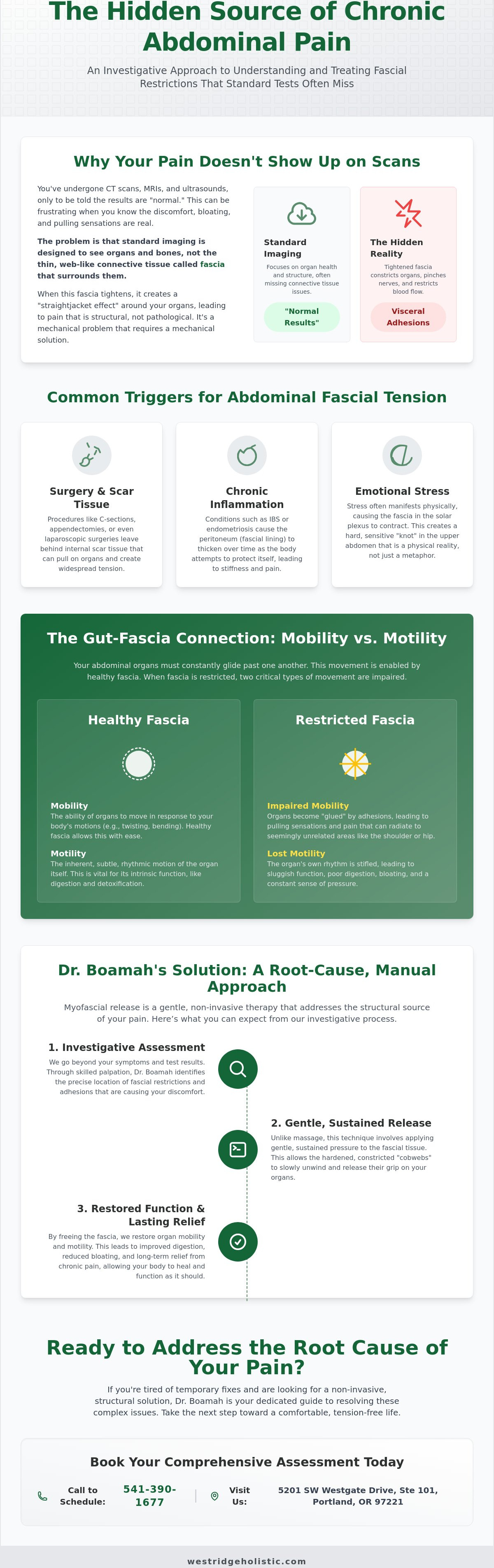
You've likely spent months, perhaps years, searching for answers to persistent stomach discomfort. When CT scans and MRIs return with "normal" results, the relief is often overshadowed by a deeper frustration. You know your body, and you know something is wrong. Abdominal myofascial restriction is a tightening of the connective tissue that wraps around your internal organs. It doesn't always show up on a screen, but its effects are undeniable. For those seeking Myofascial release for abdominal pain portland, understanding this "invisible" source of tension is the first step toward recovery.
This restriction often manifests as localized tenderness, chronic bloating, or sharp pulling sensations when you stretch or move. These aren't just digestive issues; they're often visceral adhesions. These internal "cobwebs" form after surgeries, infections, or periods of intense inflammation. They bind organs together, preventing the natural sliding and gliding necessary for healthy function. This lack of movement can lead to sluggish digestion and a constant sense of pressure that medication rarely touches.
To better understand how these restrictions impact your daily life, watch this helpful video regarding the mechanics of abdominal tension:
Why Your Tests Might Be Coming Back Normal
Standard medical imaging like X-rays or ultrasounds is designed to look at hard structures or fluid-filled organs. It isn't built to see the thin, pervasive layers of fascia. When this tissue thickens, it creates a "straightjacket effect" around your midsection. This compression can pinch nerves and restrict blood flow, leading to pain that feels untraceable. It's a mechanical problem that requires a mechanical solution. At our clinic located at 5201 sw westgate drive ste 101, Portland, Oregon, 97221, we take an investigative approach. We look beyond the images to find where your body is literally holding onto tension, ensuring your symptoms are met with curiosity rather than dismissal.
Common Triggers for Abdominal Fascial Tension
Scar tissue from C-sections, appendectomies, or laparoscopic procedures is a primary driver of fascial thickening. Even minor surgeries leave behind structural changes that can pull on distant organs. Chronic conditions like IBS or endometriosis also cause the peritoneum to thicken over time as the body tries to protect itself from inflammation. Additionally, emotional stress frequently manifests as physical "knotting" in the solar plexus. This isn't just a metaphor; it's a physical response where the fascia contracts, creating a hard, sensitive area in the upper abdomen. Dr. Boamah specializes in navigating these complex biological systems to restore your well-being. If you're ready to explore a root-cause approach with myofascial release for abdominal pain portland, call us at 541-390-1677 to book your consultation.
Understanding the Gut-Fascia Connection
Your abdomen is a high-traffic environment where organs must slide past each other thousands of times a day. This constant movement is facilitated by the peritoneum, a specialized layer of fascia that lines your abdominal cavity and suspends your organs in place. When this tissue is healthy, your organs enjoy both mobility and motility. Mobility refers to how an organ moves in response to your body’s external motions, like walking or twisting. Motility is the inherent, rhythmic motion of the organ itself, such as the subtle expansion of the kidneys or the pulsing of the liver. Both are essential. If an organ loses its ability to glide, the entire digestive and systemic environment begins to suffer.
Restrictions in one area often create ripples of pain elsewhere. For instance, a restriction in the fascia surrounding the liver can pull on the diaphragm. Because the diaphragm and the shoulder share the same nerve pathways, you might experience persistent shoulder or hip pain that seems unrelated to your digestion. This is why our investigative approach is so vital. We don't just look at where it hurts; we look at where the tension originates. The diaphragm acts as the primary engine for abdominal health. Every breath should massage your internal organs. If the diaphragm is restricted, this natural pump fails, leading to stagnation and discomfort.
The Science of Visceral Manipulation
Visceral manipulation is a refined, specialized form of myofascial release for abdominal pain portland residents can utilize to restore internal harmony. It involves applying gentle, specifically directed manual pressure to encourage the natural "sliding" motion between organs and their surrounding fascia. This practice aligns perfectly with our naturopathic primary care philosophy. We treat the body as an integrated whole, ensuring that structural integrity supports biological function. By restoring this motion, we help the body return to its innate state of health through a partnership in healing.
How Adhesions Restrict Digestive Flow
Adhesions act like internal tethers, physically binding sections of the intestines together or to the abdominal wall. This tethering creates mechanical "kinks" in the system, which often lead to functional issues like chronic constipation or persistent acid reflux. Instead of just managing these symptoms with chemistry, we use an investigative process to map tension through the entire abdominal cavity. We identify the specific tether points that are stalling your progress. If you are struggling with these "invisible" symptoms, exploring integrative healthcare options can provide the clarity you've been seeking.
If you feel like your digestion has reached a standstill, it's time to address the structural drivers. You can find us at 5201 sw westgate drive ste 101, Portland, Oregon, 97221. Our team is ready to help you manage these complex biological systems with expertise and compassion. Call 541-390-1677 to schedule your consultation and discover how myofascial release for abdominal pain portland can transform your daily life.
Why Traditional GI Treatments Often Miss Fascial Restrictions
Standard gastroenterology is designed to identify pathology, such as ulcers, tumors, or active inflammation. If your blood work is clear and your colonoscopy is unremarkable, you are often sent home with a prescription for PPIs or laxatives. While these chemical interventions manage symptoms, they cannot address a mechanical problem. If your pain is caused by a physical restriction in the tissue, no amount of medication will "unstick" an adhesion. This is the primary reason why specialized myofascial release for abdominal pain portland is so effective for patients who have "tried everything" without success.
Traditional GI training rarely focuses on the structural health of the peritoneum or the connective tissue web. Doctors are taught to look at the inside of the organ, but they often overlook how the organ is held in place. When you visit our clinic at 5201 sw westgate drive ste 101, Portland, Oregon, 97221, we shift the focus. We investigate how your internal architecture is influencing your biological function. Dr. Boamah bridges the gap between traditional diagnostics and manual therapy to ensure no stone is left unturned in your healing process.
The Mechanical vs. Chemical Debate
Think of your digestive system like a garden hose. If the hose has a physical kink in it, you cannot fix the water flow by changing the chemistry of the water. You have to physically unbend the hose. Abdominal adhesions are those kinks. Structural tension can frequently mimic the symptoms of food sensitivity, leading to chronic bloating and discomfort even when your diet is pristine. In many cases, we find it beneficial to combine MFR with hormone testing, especially when pelvic pain and abdominal tension seem to fluctuate with your cycle.
Holistic Integration for Lasting Relief
Dr. Boamah utilizes an investigative approach that looks at the "whole person" to ensure your relief isn't just a temporary fix. We explore the powerful synergy between holistic physical therapy and visceral release. This combination ensures that as we release the fascia, your body learns how to maintain that new, open state through better posture and daily habits. Our Portland clinic is dedicated to finding these hidden drivers of dysfunction that conventional systems often miss. If you're ready for a deeper level of discovery, call 541-390-1677 to schedule your consultation. We don't just react to your pain; we partner with you to navigate the complex biological systems that lead to peak well-being.
What to Expect During Your Myofascial Release Session
Stepping into our clinic at 5201 sw westgate drive ste 101, Portland, Oregon, 97221, you'll find a space designed for deep discovery and partnership. Your session begins with a detailed postural analysis. We look at how your body carries itself and where structural imbalances might be pulling on your midsection. Dr. Boamah then uses gentle abdominal palpation to feel for areas of density, heat, or resistance. This investigative phase is crucial for tailoring your myofascial release for abdominal pain portland to your specific internal landscape.
The sensation of MFR is distinct from traditional massage. Instead of deep-tissue "poking" or rubbing, you'll feel a slow, melting pressure. Fascia is a stubborn, collagenous tissue that doesn't respond well to sudden force. It requires a time-dependent approach. We hold specific positions with gentle pressure for 3 to 5 minutes at a time. This sustained contact allows the tissue to actually "unwind" and release its grip on your organs. It's a patient, methodical process that respects the body's natural pace of change.
Because the abdomen is a primary center for emotional processing, be prepared for a potential emotional release. It's common to store stress, anxiety, or past trauma in the solar plexus and pelvic bowl. As the physical tension dissipates, you might feel a surge of emotion or a sudden sense of lightness. We provide a compassionate, non-judgmental environment to navigate these complex biological and emotional systems together.
The Investigative Assessment
We map your tension from the ribcage down to the pelvic bowl to identify specific trigger points within the abdominal wall. These points often refer pain to the back or hips, masking the true source of your discomfort. Breathwork is your primary tool during the session. We guide you through specific breathing patterns that facilitate the release from the inside out. This internal expansion helps the fascia soften, making the manual work significantly more effective and lasting.
Post-Treatment Care and Integration
After your session, prioritize hydration to help your system process the structural changes. We recommend gentle movement, such as a short walk, to help your body integrate the new alignment. While many patients feel an immediate shift in their "invisible" pain, a series of sessions is typically necessary to resolve long-standing adhesions. We also provide you with practical self-care techniques to maintain fascial mobility between visits. If you're ready to start this deep-dive journey, schedule your investigative session today by calling 541-390-1677. Dr. Boamah is ready to help you reclaim your comfort and well-being.
Healing Abdominal Pain with Dr. Boamah at Westridge Holistic medicine
Living with chronic discomfort often feels like a lonely battle, especially when your symptoms don't fit neatly into a standard diagnosis. Dr. Boamah specializes in complex cases. She provides a path forward for those navigating persistent abdominal and pelvic pain that has been overlooked by traditional systems. By choosing myofascial release for abdominal pain portland, you're opting for a structural solution that respects your body's history. At Westridge Holistic medicine, we don't settle for surface-level fixes. We provide an investigative approach that serves as a significant personal milestone on your journey toward lasting relief. Our focus remains on identifying the specific fascial restrictions that prevent your organs from functioning at their peak.
A Compassionate Partner in Your Healing Journey
Dr. Boamah bridges the gap between clinical authority and a warm, welcoming atmosphere. She prioritizes validating your experiences, ensuring you feel heard and supported throughout the process. Our modern, tech-forward practice is situated in the Sylvan Highlands area. It provides a professional yet comfortable setting for your recovery. We see health as a partnership. Your unique biological systems are met with genuine curiosity and expertise rather than temporary management. This proactive style ensures we aren't just reacting to issues but promoting your highest level of well-being through daily habits and specialized care.
Schedule Your Consultation in Portland Today
You don't have to manage your pain alone. We invite you to resolve your chronic discomfort by calling our Portland clinic to schedule your comprehensive assessment. You can find us at 5201 sw westgate drive ste 101, Portland, Oregon, 97221. To take the next step toward root-cause healing with myofascial release for abdominal pain portland, call 541-390-1677 today. We're ready to help you rediscover a life defined by comfort and well-being. Our team is dedicated to offering the security and expert guidance you need to navigate these complex biological systems with confidence.
Reclaiming Your Internal Balance and Comfort
You've lived with "invisible" pain long enough. We understand the frustration of normal test results that don't match your physical reality. By addressing the structural web of the peritoneum and visceral fascia, we help you move beyond temporary symptom management. Our clinic, founded by Dr. Jason Black, ND, in 2004, remains committed to an investigative, deep-dive approach to chronic pain. We don't just look for what's broken; we look for where your body's natural sliding and gliding have been restricted. This investigative journey serves as a significant personal milestone on your path to recovery.
Choosing specialized myofascial release for abdominal pain portland is a significant step toward long-term relief and improved digestive function. You deserve a partner who navigates these complex biological systems with genuine curiosity and clinical expertise. Visit us at 5201 sw westgate drive ste 101, Portland, Oregon, 97221, to experience a supportive environment focused on your individual needs.
Your body is capable of profound healing, and we are here to guide you every step of the way.
Frequently Asked Questions
Can myofascial release help with bloating and IBS?
Yes, myofascial release is highly effective for managing bloating and symptoms of IBS. It addresses the physical tethering of the intestines that can lead to mechanical stagnation. By restoring the natural motility of your organs, we help your digestive system function without the structural "kinks" that often cause discomfort. This investigative approach targets the root cause of sluggishness rather than just masking the symptoms with medication.
How is abdominal myofascial release different from a regular massage?
Regular massage typically focuses on kneading or rubbing muscles to improve circulation and relaxation. In contrast, myofascial release for abdominal pain portland utilizes a time-dependent approach that targets the connective tissue web. We apply slow, sustained pressure for several minutes at a time to allow the fascia to "melt" and reorganize. This specialized method is necessary to reach the deeper visceral layers that standard massage techniques cannot influence.
Is myofascial release for abdominal pain painful?
Most patients describe the sensation as a deep, "melting" stretch rather than acute pain. While we may encounter areas of significant density or tenderness, we always work within your comfort level. The goal is to stay at the leading edge of resistance without triggering your body's defensive guarding response. This gentle, persistent pressure allows for a much more profound release of tension than forceful "poking" or deep-tissue work.
How many sessions will I need to see results for my abdominal pain?
Every individual's healing journey is unique, though many patients notice a positive shift within their first three sessions. For chronic conditions or long-standing surgical adhesions, a consistent series of treatments is often necessary to achieve lasting structural change. During your initial assessment at 5201 sw westgate drive ste 101, Portland, Oregon, 97221, Dr. Boamah will help you map out a personalized plan based on your specific health history.
Can this therapy help with scar tissue from a C-section or surgery?
Absolutely. Myofascial release is one of the most effective ways to treat the dense adhesions that form after C-sections or laparoscopic procedures. These internal scars can pull on distant organs and restrict your natural range of motion. By softening these rigid collagen fibers, we help restore the essential sliding and gliding of your visceral fascia. This process significantly reduces the sharp pulling sensations and chronic pressure often left behind by surgery.
What should I wear to my myofascial release appointment in Portland?
We recommend wearing loose, comfortable clothing that allows for easy movement, such as gym shorts, yoga pants, or a tank top. For the most effective fascial work, direct skin-to-skin contact is often preferred as it allows the practitioner to feel the subtle "drag" and resistance of the tissue. Please avoid applying heavy body oils or lotions before your session, as they can make it difficult to maintain the necessary grip for fascial unwinding.
Are there any side effects to abdominal fascial work?
Some patients experience mild muscle soreness or temporary fatigue following a session, which is a normal sign that the body is integrating the changes. You might also notice an increase in thirst as your system processes the structural release. Because the abdomen is a major center for emotional processing, it's also common to experience an emotional release during or after your appointment. These are all healthy indicators that your biological systems are moving toward a state of balance.
Does insurance cover myofascial release therapy at your clinic?
Insurance coverage for myofascial release therapy varies significantly depending on your specific provider and plan details. Many insurance companies that include benefits for naturopathic manual therapy or physical medicine may cover these services. We recommend contacting your insurer directly to verify your specific benefits and reimbursement options. If you have questions about our services or wish to book a consultation, please call our Portland office at 541-390-1677.
Disclaimer
for educational purposes only