

What if your "normal" lab results are the very reason you still feel unwell? If you've spent months cycling through restrictive diets only to find your bloating and fatigue remain, you aren't alone. It's incredibly frustrating to feel like your health is a mystery that conventional medicine can't solve. Many patients come to us exhausted by the confusion between a true allergy and a hidden sensitivity. By utilizing a comprehensive food allergy blood test, we can look past surface-level symptoms. You'll learn the vital differences between IgE and IgG testing and how this data provides a roadmap to healing your gut rather than just avoiding triggers. We'll explore how professional interpretation of these complex labs can finally resolve your chronic health issues.
Dr. Philip Boamah specializes in addressing these complexities through a root-cause approach. At Westridge Holistic medicine, he uses advanced diagnostic tools like food sensitivity testing and comprehensive blood work to provide the clarity you've been seeking. Instead of guessing which foods are causing inflammation, Dr. Boamah partners with you to analyze how your unique immune system reacts. He doesn't just hand you a list of forbidden foods; he creates a personalized plan to restore your wellness. This is the beginning of a collaborative journey toward lasting health.
Ready to stop guessing and start healing? Book a consultation with Dr. Boamah today to begin your journey toward optimum health.
Key Takeaways
- Understand why a negative result on a standard food allergy blood test doesn't always mean a food is safe for your unique system.
- Identify the critical differences between IgE panels for immediate reactions and IgG testing for chronic symptoms like fatigue or bloating.
- Learn how advanced serum analysis and reflex testing provide a more accurate picture of your body's specific immune triggers.
- Discover how Dr. Boamah uses these results to address the gut-immune axis rather than just providing a list of foods to avoid.
- Get clear instructions on how to schedule your consultation and blood draw in the Portland or Hillsboro areas.
What is a Food Allergy Blood Test and Why Do Results Often Conflict?
A food allergy blood test serves as a high-precision diagnostic window into your immune system. At its core, this tool measures the concentration of specific antibodies, known as immunoglobulins, that your body produces in response to food proteins. While many people are familiar with the immediate, dramatic reactions associated with traditional allergies, the reality of food-related illness is often much more subtle. This is where the conflict begins. You might feel significantly unwell after eating certain meals, yet your standard medical reports show nothing out of the ordinary. This discrepancy isn't in your head; it's a limitation of how the data is being interpreted.
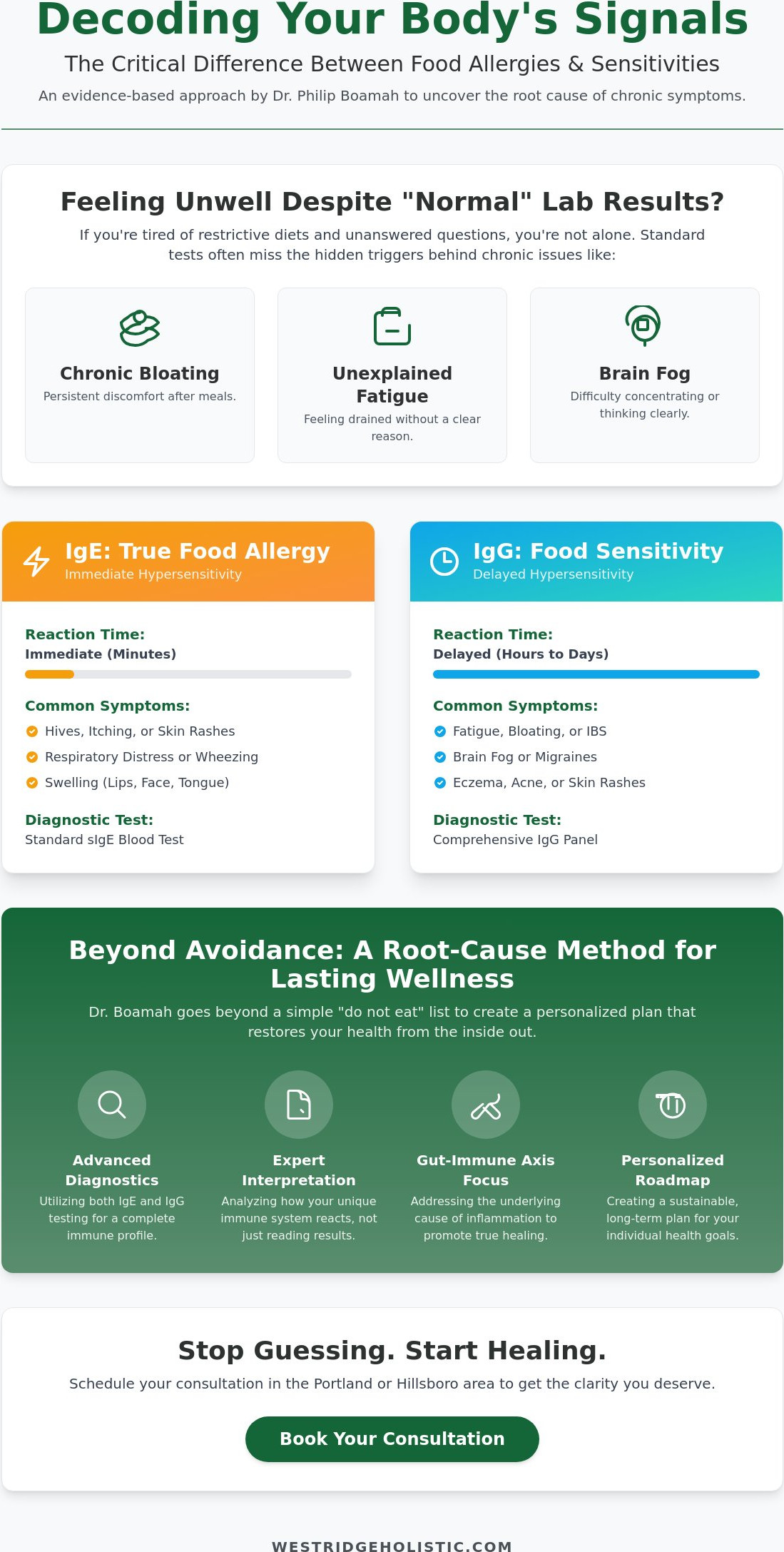
The "normal result" trap is a frequent hurdle for patients seeking answers. In a typical clinical setting, a specific Immunoglobulin E (sIgE) test is used to identify immediate hypersensitivity. These are the reactions that happen within minutes, such as hives or respiratory distress. However, if your symptoms include chronic bloating, persistent brain fog, or unexplained skin rashes that appear hours or even days later, a standard IgE-only panel will likely miss the culprit. This leads to a cycle of frustration where you feel unheard by the conventional healthcare system.
The Frustration of Unexplained Symptoms
It's incredibly draining to live with symptoms that don't have a clear name. Many of our patients at Westridge Holistic medicine have spent years trying to manage "hidden" triggers that standard primary care tests simply aren't designed to find. When chronic inflammation stems from these undetected sources, it can affect every aspect of your life, from your energy levels to your mental clarity. To achieve lasting wellness, we have to move beyond symptom management. Adopting a comprehensive approach to understand what is food intolerance is essential for anyone who has been told their labs are fine while their body says otherwise. Dr. Boamah investigates these nuances with genuine curiosity, ensuring your health concerns are validated with data.
IgE vs. IgG: Understanding the Immune Timeline
To find the root-cause of your distress, we must understand the immune system's timeline. Allergy blood tests typically focus on IgE antibodies, which mediate immediate reactions. These are vital for safety, but they only tell half the story. Immunoglobulin G (IgG) antibodies, on the other hand, are involved in delayed hypersensitivity. Your immune system effectively "remembers" these foods as threats, creating a slow-burn inflammatory response that can linger for days. Testing both IgE and IgG allows for a personalized diagnostic approach. Dr. Boamah uses this complete health profile to build a roadmap for your recovery, helping you move past restrictive diets and toward true gut healing.
If you're ready to stop the guesswork, Dr. Boamah is here to help. Begin your journey toward clarity by scheduling a consultation today.
Comparing Food Allergy Panels vs. Food Sensitivity Testing
Choosing the right diagnostic path starts with understanding the specific tools available. While our previous discussion established the difference between IgE and IgG antibodies, selecting a clinical panel depends on your specific symptoms and health goals. A standard food allergy blood test in a conventional setting often focuses on immediate, high-risk reactions. While these are critical for safety, they frequently leave patients with chronic issues like migraines or IBS feeling ignored. If your symptoms are delayed rather than immediate, the standard panel might not be the right tool for your specific needs. Transitioning from temporary symptom management to long-term healing requires a more expansive look at your body's immune landscape.
Standard Clinical Panels
Conventional labs typically provide fast, widely available results that focus on high-risk allergens. These panels are designed to identify anaphylactic risks associated with common triggers like nuts, shellfish, or eggs. Learning What is a Food Allergy Blood Test helps clarify why these are often the first step to diagnose food allergies. However, their scope is often limited to a small group of 15 to 20 foods. They don't account for the delayed sensitivities that cause systemic inflammation over several days, which is why many patients still feel unwell despite "normal" results.
Comprehensive Naturopathic Testing
Dr. Boamah offers a more expansive investigative approach that goes beyond standard screenings. At Westridge Holistic medicine, our food sensitivity testing in Oregon expands the search to over 100 different foods, including various herbs and spices common in local dietary habits. We also integrate advanced options like cellular analysis to see how your body reacts in real-time. If you've been searching for an alcat test near me, you'll find that we look beyond just antibodies. We analyze how your white blood cells actually respond to specific proteins to identify the root-cause of your distress.
A vital part of this process is component testing, also known as reflex testing. Instead of just knowing you have a general reaction to "dairy," this method allows us to identify the specific protein causing the issue. This level of detail is essential for creating a personalized lifestyle medicine plan. It ensures you aren't stuck with an unnecessarily restrictive diet, but rather a targeted roadmap to recovery. You don't have to navigate these complex lab results alone. Dr. Boamah is ready to help you interpret this data and build a plan that works for your unique biology. If you are ready for a deeper investigation into your health, you can schedule a consultation to explore our comprehensive testing options.
How Food Allergy Blood Tests Work: Accuracy and Methodology
Understanding the mechanics of a food allergy blood test is essential for accurate interpretation. When you provide a blood sample, the laboratory measures the concentration of specific antibodies circulating in your serum. These results are typically reported in quantitative values, showing exactly how much your immune system is reacting to a particular protein. However, a high number doesn't always tell the whole story. The science of diagnostics is complex, and raw data requires a knowledgeable partner to translate it into a functional health plan.
One major factor that many standard labs overlook is the impact of your current diet on test accuracy. If you've already removed a food from your meals due to discomfort, your immune system may not be producing enough antibodies for the test to detect. This can lead to a misleadingly "normal" result that leaves your symptoms unexplained. To find the root-cause of your distress, you generally need to be consuming the suspected foods regularly in the weeks leading up to the blood draw. Without this active exposure, the test cannot accurately capture your body's immune response.
We also have to address the difference between sensitization and a clinical allergy. A positive test result indicates your body has created antibodies, but it doesn't guarantee you'll have a physical reaction every time you eat that food. This is where "false positives" often lead to unnecessary food fear and overly restrictive diets. Dr. Boamah utilizes reflex testing to solve this confusion. When a general food category shows elevation, the lab automatically analyzes specific proteins within that food to see if the reaction is clinically significant or just a minor sensitivity.
The Role of Allergen Component Testing
Rather than just identifying a broad "wheat" sensitivity, we can break the results down into specific proteins like gliadin. This level of detail helps us determine if your reaction is a mild cross-reactivity or a potentially severe immune response. Component testing is a method to differentiate between cross-reactivity and true allergy by identifying the specific molecular triggers within a food group. This precision allows Dr. Boamah to create a more nuanced lifestyle medicine plan that targets the exact source of your inflammation.
Why At-Home Kits Often Fail
Many people turn to at-home kits for convenience, but these often rely on finger-prick dry blood spots which are less stable than clinical venipuncture. These kits frequently lack the professional interpretation necessary to turn raw data into action. Without the guidance of an nd doctor, you might end up cutting out nutritious foods without a clear medical reason. Dr. Boamah ensures that your diagnostics are clinical-grade and interpreted through the lens of your entire health history. It's about partnership, not just a printout of results.
Begin your journey toward a clearer understanding of your body's needs. Schedule a consultation with Dr. Boamah today to ensure your testing is accurate and professionally interpreted.
Dr. Boamah: Your Expert for Root-Cause Diagnostic Interpretation
A food allergy blood test provides a wealth of data, but raw numbers are meaningless without a roadmap for implementation. Most conventional clinics hand you a list of "bad" foods and send you on your way. This approach often leads to a cycle of restriction that doesn't actually solve the underlying problem. Dr. Philip Boamah bridges the gap between complex lab results and your daily life. He acts as a Scientific Caretaker, combining high-level medical intelligence with deep empathy for the frustration you've experienced. He doesn't just look for what you should avoid; he investigates why your immune system is overreacting in the first place.
The naturopathic advantage lies in looking at the gut-immune axis. Your immune system resides largely in your digestive tract, meaning that food sensitivities are often a symptom of a deeper imbalance. Dr. Boamah focuses on resolving the underlying biological imbalances that cause symptoms rather than just managing the symptoms themselves. This investigative process transforms a simple clinical appointment into a personal milestone. You're no longer just managing a condition; you're beginning a journey toward optimum health with a mentor who understands the complexities of the human body.
Beyond Avoidance: Healing the Gut Lining
Many patients suffer from "Leaky Gut," a condition where the intestinal lining becomes overly permeable. This allows food proteins to enter the bloodstream, triggering the immune responses seen on a food allergy blood test. Dr. Boamah creates specific protocols to repair this lining, which eventually allows many patients to reintroduce foods they once reacted to. We've seen remarkable success stories where patients moved from 20 reactive triggers down to just 5 through targeted gut repair. Once the immune system calms down, the body can often handle a much wider variety of nutrition without distress.
Integrating Comprehensive Diagnostics
True healing rarely happens in a vacuum. To provide a complete picture of your health, Dr. Boamah often combines food data with hormone testing and Nutrigenomix analysis. This allows for highly customized supplement plans and lifestyle medicine adjustments that support your immune system through every phase of healing. By looking at how your genetics, hormones, and diet intersect, we can provide a level of personalized care that surface-level symptom management simply cannot match. This thoroughness ensures that every step of your journey is backed by scientific evidence and compassionate guidance.
You deserve a healthcare partner who listens to your story and investigates the root-cause of your symptoms. Schedule your personalized diagnostic consultation with Dr. Boamah today to find the answers you've been searching for.
Scheduling Your Food Allergy Blood Test in Portland and Hillsboro
Accessing a professional food allergy blood test shouldn't be a source of stress or confusion. We've streamlined our diagnostic process to ensure you feel supported from your first inquiry to your final lifestyle adjustment. Our goal is to remove the guesswork from your health and replace it with clear, actionable data. By following a structured path to discovery, we can identify the specific triggers that have been holding you back from feeling your best. This methodical approach builds trust and ensures that your care is as intentional as it is effective.
Your journey begins with a detailed initial consultation with Dr. Boamah. During this session, he'll review your medical history, current symptoms, and previous lab results to determine which specific panel will provide the most value. Once the right test is selected, you'll visit one of our convenient blood draw partners in the Sylvan Highlands or Hillsboro areas. These clinical-grade facilities ensure the integrity of your sample for advanced analysis. After the lab processes your results, you'll return for a comprehensive review. Dr. Boamah doesn't just read the numbers; he builds a personalized "Root-Cause" roadmap that explains the biological reasons behind your immune reactions. This session is highly collaborative, allowing you the space to ask questions and understand the gut-immune axis.
What to Expect During Your Journey
Preparation is key for diagnostic accuracy. Depending on the specific panel, you might need to fast for 8 to 12 hours or temporarily pause certain medications like antihistamines or steroids. Our team will provide clear, written instructions before your draw to ensure the data is as precise as possible. You can expect your results within 7 to 14 days for most advanced food sensitivity and allergy panels. We also handle the logistical side of care, including proactive insurance verification and transparent payment options, so you can focus entirely on your healing. Our office ensures that the path to care remains visible and uncomplicated at every step.
Begin Your Journey to Optimum Health
We understand that food issues affect the whole family. This is why we prioritize compassionate pediatric naturopathic care for our youngest patients in Portland and the surrounding communities. Your symptoms are real. The frustration you've felt from previous "normal" tests is valid, but the data exists to explain what's happening inside your body. You don't have to manage these complexities alone. Dr. Boamah is ready to navigate this journey alongside you, offering the expert guidance and security you deserve. It's time to move beyond temporary fixes and toward a lifestyle built on wellness and vitality.
Schedule your food allergy consultation with Dr. Boamah today to take the first step toward clarity and relief.
Take the Next Step Toward Lasting Wellness
Finding relief from chronic symptoms shouldn't feel like an endless cycle of trial and error. You now understand that a standard food allergy blood test is only the beginning of a much deeper investigation into your health. True healing requires looking at the gut-immune axis and using advanced tools like specialized Alcat and IgG testing to identify hidden inflammatory triggers. Since 2004, our clinic, founded by Dr. Jason Black, has provided holistic primary care to families across Portland and Sylvan Highlands. We specialize in bridging the gap between clinical data and your daily lifestyle medicine.
Dr. Boamah is ready to help you interpret these complex results and build a roadmap that addresses the root-cause of your distress. Your health concerns deserve to be investigated with dedication and scientific expertise. Don't let unexplained symptoms dictate your life any longer. You have the power to reclaim your vitality through personalized, data-driven care.
Begin your journey to root-cause healing; book your consultation with Dr. Boamah
Frequently Asked Questions
Is a food allergy blood test more accurate than a skin prick test?
Accuracy often depends on your specific clinical presentation. While skin prick tests provide immediate results, a food allergy blood test is often preferred for patients with severe eczema or those who cannot safely stop taking antihistamines. Blood tests provide a quantitative measurement of IgE antibodies in the serum. Dr. Boamah uses these precise values to build a personalized roadmap for your recovery.
How much does a comprehensive food allergy blood test cost in Portland?
The cost for a food allergy blood test typically ranges from $200 to $1,000 without insurance. This price varies based on the number of allergens being analyzed in the panel. Additionally, a consultation with a specialist can range from $150 to $300 per visit. Our team at Westridge Holistic medicine provides transparent pricing to ensure you feel secure throughout your journey.
Can I get a food allergy blood test without a doctor’s referral?
You can purchase at-home kits, but these often lack the clinical accuracy of a professional draw. A referral from a licensed provider like Dr. Boamah is essential for proper diagnostic interpretation. Without professional guidance, raw data can lead to unnecessary food fear. We ensure your labs are ordered through reputable clinical partners and analyzed within the context of your total health.
What is the difference between IgE and IgG blood testing?
IgE tests are the standard for diagnosing true, immediate allergies that can be life-threatening. The FDA clears these for diagnostic accuracy. In contrast, IgG testing identifies delayed sensitivities that contribute to chronic issues like migraines or fatigue. Dr. Boamah often uses both to gain a complete picture of your immune response, helping you move toward root-cause resolution.
Do I need to be eating the food for the blood test to be accurate?
Yes, you must regularly consume the foods being tested for the results to be valid. If you've already eliminated a food, your immune system won't produce the antibodies the lab needs to measure. This can lead to a false negative result. Dr. Boamah will provide specific instructions on how to prepare your diet before your blood draw to ensure accuracy.
What happens if my food allergy blood test comes back negative but I still have symptoms?
A negative result simply means your symptoms aren't caused by a traditional IgE-mediated allergy. It doesn't mean your discomfort isn't real. Dr. Boamah investigates other factors, such as leaky gut or hormonal imbalances, that might be mimicking allergy symptoms. We don't stop at "normal" results; we keep digging until we find the actual cause of your inflammation.
Can children get food allergy blood tests at Westridge Holistic medicine?
We provide compassionate pediatric naturopathic care for children in Portland and Hillsboro. With about 1 in 13 children now diagnosed with a food allergy, early and accurate testing is more important than ever. Dr. Boamah uses a gentle, investigative approach to help parents understand their child's unique triggers. This partnership ensures your child can grow and thrive without unnecessary dietary restrictions.
Will insurance cover my food sensitivity or allergy testing?
Coverage depends entirely on your specific insurance provider and plan. Most companies cover standard IgE allergy testing but may consider IgG sensitivity panels as elective. Our clinic offers insurance verification services to help you understand your benefits before your appointment. We believe in transparency, ensuring there are no surprises as you begin your journey to optimum health.
Disclaimer
for educational purposes only