

Approximately 65% of the global adult population has a reduced ability to digest lactose, yet millions continue to suffer through meals in silence. You've likely experienced the sudden bloat or sharp discomfort that turns a dinner out into a source of social anxiety. It's exhausting to feel like your body is at war with your plate. If you're searching for answers, you first need to understand what is food intolerance and how it differs from a true allergy. While an allergy involves the immune system, an intolerance is a digestive failure that requires a root-cause investigation to resolve. You deserve more than temporary fixes that ignore your unique biology.
This guide clarifies your symptoms and maps out a journey toward lasting relief. Dr. Boamah specializes in identifying these hidden triggers through advanced diagnostics. By utilizing Food Sensitivity Testing and Nutrigenomix, Dr. Boamah uncovers the specific biological reasons for your inflammation. A 2026 systematic review found that 10.3% of people worldwide report gluten-related symptoms despite not having celiac disease. This highlights the need for personalized care. Through professional wellness strategies and targeted lifestyle medicine, you can move past the confusion and begin your journey toward digestive wellness today.
Key Takeaways
- Identify the fundamental difference between an immune-mediated allergy and a digestive breakdown to better understand your body's unique signals.
- Uncover how chronic inflammation and "leaky gut" can turn simple food triggers into systemic issues like brain fog or joint discomfort.
- Clarify exactly what is food intolerance by examining how delayed reaction times and non-IgE triggers differ from standard food allergies.
- Learn how Dr. Boamah utilizes advanced Food Sensitivity Testing and Nutrigenomix to build a personalized path toward long-term relief and digestive wellness.
What is Food Intolerance? Defining the Digestive Breakdown
Many people struggle with chronic digestive discomfort for years without a clear answer. You might have been told your blood work looks perfect, yet your body tells a different story every time you eat. To begin your healing journey, it’s vital to answer the foundational question: What is Food Intolerance? and how does it actually impact your wellness? Unlike a food allergy, which triggers an immediate and potentially life-threatening immune response, an intolerance is a non-immunological reaction. It’s essentially a breakdown in the digestive process where your body lacks the tools to process specific components of your food.
To better understand the distinction between allergies and other reactions, watch this helpful video:
The primary mechanism behind this issue often involves a deficiency in specific enzymes. For instance, approximately 65% of the global adult population has a reduced ability to digest lactose. In other cases, you might react to natural chemicals or additives like MSG and sulfites. This is where the concept of toxic load comes into play. While someone with an allergy must avoid even a trace amount of a trigger, someone with an intolerance might handle a small serving but experience symptoms once they cross a certain threshold. This dose-dependent nature is why your symptoms can feel so unpredictable.
This delay in reaction makes identification difficult. Symptoms often appear hours or even days after ingestion, creating a confusing trail of evidence. Because the reaction isn't immediate, many people don't realize that the bloat they feel on Tuesday might be linked to a meal they enjoyed on Sunday. Dr. Boamah specializes in identifying these hidden triggers through advanced diagnostics like Food Sensitivity Testing and Nutrigenomix Testing, ensuring your path to relief is based on clinical data rather than guesswork.
The Problem: Living with Unexplained Digestive Distress
Living with unexplained distress is more than just a physical burden; it carries a heavy emotional toll. You might feel social anxiety about eating out or frustration when "healthy" foods leave you feeling miserable. A 2026 systematic review found that 10.3% of people worldwide report symptoms related to gluten or wheat despite not having celiac disease. This highlights how many people fall through the cracks of conventional medicine. If left unaddressed, this constant irritation can lead to chronic systemic inflammation. Dr. Boamah acts as a Scientific Caretaker, investigating the root-cause of your symptoms to restore your quality of life.
Intolerance vs. Sensitivity: Clearing the Confusion
It’s easy to get lost in medical jargon when your health is on the line. A food sensitivity is typically an IgG immune response, which involves a different pathway than a standard allergy. In contrast, an intolerance is specifically a metabolic limitation of the gut. It means your digestive system simply isn't equipped to dismantle certain molecules. Identifying what is food intolerance requires looking at your metabolic health and enzymatic function. A food intolerance is specifically a metabolic limitation of the gut.
Symptoms and Systemic Impact: It Is More Than Just a Tummy Ache
Many people assume that identifying what is food intolerance only requires looking at stomach pain. However, the impact is often far more pervasive. You might wake up with unexplained joint stiffness or find yourself battling intense midday fatigue that no amount of caffeine can fix. These symptoms are frustrating because they feel disconnected from your last meal. This persistent discomfort often leads to a cycle of exhaustion and confusion as you try to navigate daily life without knowing which foods are triggering your distress.
Unlike a food allergy, which strikes within minutes, intolerance symptoms often emerge 2 to 48 hours after eating. This delayed onset makes it nearly impossible to pin down the culprit without professional guidance. This is why Dr. Boamah emphasizes the use of a detailed food diary to track these subtle shifts in your wellness. By documenting what you eat and how you feel over several days, you provide the clinical data necessary to begin your healing journey. Understanding what is food intolerance requires looking at the clock just as much as your plate.
When your gut fails to process certain foods, it can lead to increased intestinal permeability, often called "leaky gut." This condition allows undigested particles and metabolic byproducts to enter the bloodstream, triggering systemic inflammation that affects your entire body. Scientific research into the diagnosis and management of these conditions shows that musculoskeletal pain and neurological shifts are common indicators of a digestive breakdown. Dr. Boamah approaches these symptoms as a Scientific Caretaker, investigating the root-cause rather than just masking the pain.
If you're tired of surface-level fixes that ignore your unique biology, you can explore specialized testing options to gain clarity. Dr. Boamah uses these insights to create a personalized plan that addresses your specific metabolic needs, moving you toward long-term relief and optimum health.
Digestive Signs You Should Not Ignore
Abdominal cramping and gas aren't just "normal" parts of eating; they're signals of distress. In cases of carbohydrate malabsorption, unabsorbed sugars draw water into the colon, leading to osmotic diarrhea. Conversely, some intolerances slow down motility, causing chronic constipation and a heavy, sluggish feeling. These issues prevent you from absorbing vital nutrients, leaving you depleted and malnourished despite eating a full diet. Dr. Boamah helps restore this balance through targeted lifestyle medicine and nutritional support.
The Surprising Non-Digestive Symptoms
Your gut and brain are deeply connected. Chronic migraines or persistent brain fog are frequently linked to how your body processes specific food chemicals. Skin flare-ups, such as eczema or unexplained rashes, often serve as an external map of internal gut irritation. Even musculoskeletal issues like joint inflammation can stem from the systemic "toxic load" caused by undigested food particles. Recognizing these red flags is the first step in a collaborative process toward total body wellness.
Common Triggers: From Lactose to Natural Chemicals
Understanding what is food intolerance means looking beyond the "healthy" labels on your groceries. Many patients arrive at our clinic frustrated that a simple salad or a bowl of fruit causes severe bloating and fatigue. This happens because your body lacks the specific tools to process certain molecules. Modern food processing has increased our exposure to additives and refined sugars, often overwhelming our natural enzymatic capacity. When these triggers aren't properly broken down, they linger in the gut, causing the systemic issues we discussed earlier. Identifying the specific Causes of food intolerance is the first step in moving from confusion to clarity.
Identifying these triggers shouldn't be a game of trial and error. Dr. Boamah acts as your investigative partner, using clinical tools to find the root-cause of your discomfort. For example, nutrigenomix testing can reveal genetic predispositions that affect how you metabolize caffeine, sodium, or even gluten. By understanding your DNA, you gain a clear map of your nutritional needs. This scientific approach removes the guesswork from your diet and empowers you to take control of your long-term wellness through lifestyle medicine. It's about building a partnership between your biology and your plate.
Enzyme Deficiencies: The Lactose and Fructose Factor
The most frequent culprits in a digestive breakdown are lactose and fructose. Your body requires the enzyme lactase to split milk sugar into absorbable pieces. As we age, many of us stop producing this enzyme, leading to a situation where lactose remains in the digestive tract to be fermented by bacteria. This fermentation creates the gas and pressure that many mistake for a simple stomach bug. Fructose malabsorption is equally common, affecting approximately 33% of the population. It's often found in high concentrations in apples, pears, and honey. These are not "bad" foods, but they are "unprocessed" by your specific gut. Dr. Boamah helps you identify these metabolic gaps so you don't have to guess which meal will cause your next flare-up.
Chemical and Additive Sensitivities
Beyond enzymes, your body might react to the chemical makeup of your food. Flavor enhancers like MSG or preservatives like sulfites in wine can trigger significant reactions. Naturally occurring compounds also play a role in your wellness. Salicylates found in many plants or histamines in aged cheeses and meats can lead to skin rashes and headaches. These reactions are often dose-dependent, meaning you might feel fine after one bite but miserable after a full serving. This "toxic load" is a primary reason why defining what is food intolerance is so complex without professional help. By focusing on root-cause care, Dr. Boamah ensures your health concerns are investigated with thoroughness and dedication.
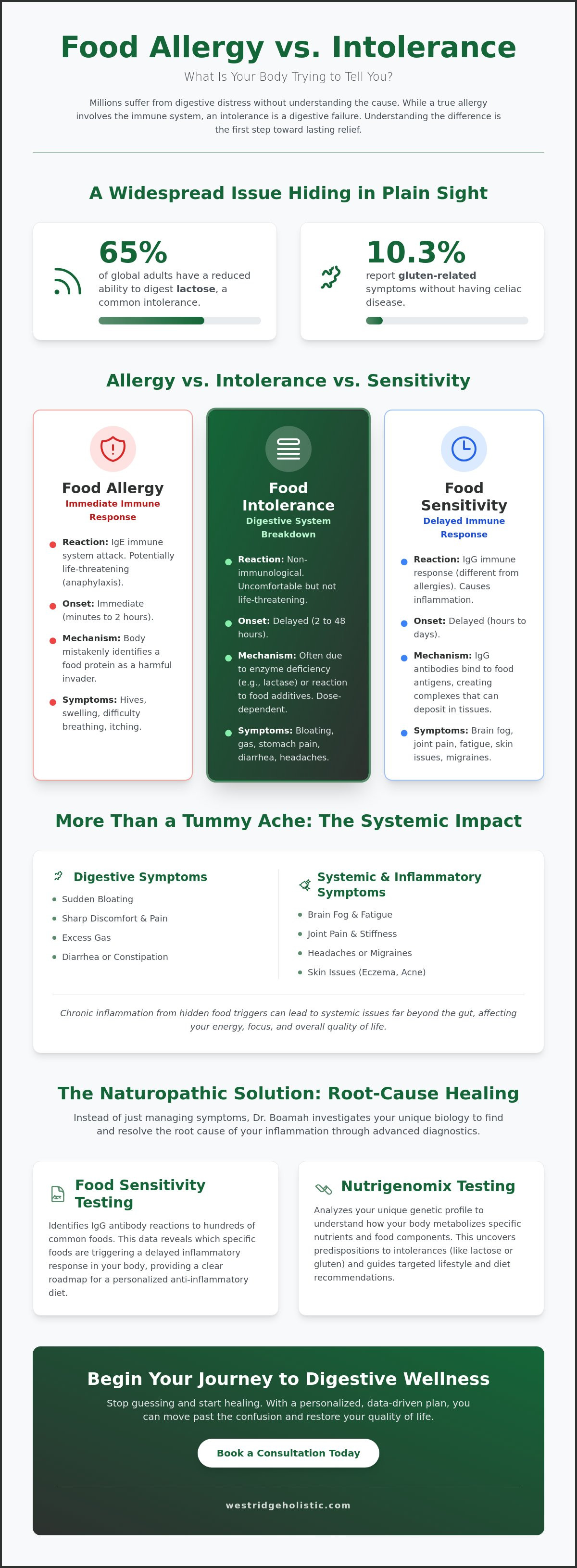
Diagnosis: Allergy vs. Intolerance vs. Sensitivity
Terminology often creates a barrier to proper care. You might feel unwell after eating, but when your standard allergy tests return "normal," the frustration only grows. This happens because most conventional clinics only look for IgE-mediated responses. To find relief, you must understand the clinical distinctions between these three categories. This knowledge is the foundation of your healing process. If you suspect an immediate immune response, you can review our guide on how to diagnose food allergies in Oregon for a focused look at IgE triggers.
| Feature | Food Allergy | Food Intolerance | Food Sensitivity |
|---|---|---|---|
| System | Immune (IgE) | Digestive/Metabolic | Immune (IgG/Cellular) |
| Reaction Time | Immediate (minutes) | Delayed (2-48 hours) | Delayed (up to 72 hours) |
| Severity | Can be fatal | Chronic discomfort | Systemic inflammation |
| Primary Test | Skin Prick/Blood IgE | Breath Test/DNA | IgG/Alcat Panels |
Many patients attempt a "DIY" elimination diet before seeking professional help. While well-intentioned, these diets are notoriously difficult to maintain and often yield inconclusive results. Estimates suggest that up to 13% of Americans may have non-celiac gluten sensitivity, yet many miss the mark by only eliminating dairy or sugar. Biology is complex. Without data, you're just guessing. Defining what is food intolerance for your specific body requires looking at enzymatic function and genetic predispositions rather than just avoiding random food groups.
Why Conventional Testing Often Misses the Mark
Skin prick tests are designed to catch allergies that cause hives or anaphylaxis. They do not detect the metabolic failures that define an intolerance. A "negative" result on a standard allergy panel can lead to a false sense of security, leaving you to believe your symptoms are "all in your head." In reality, your body might be struggling with a lack of enzymes or a chemical sensitivity that an IgE test cannot see. You need a Scientific Caretaker who looks beyond the surface. Professional diagnostics provide the clarity that standard labs often overlook.
The Role of Advanced Clinical Diagnostics
Dr. Boamah utilizes clinical-grade food sensitivity testing to identify the specific triggers behind your inflammation. For those needing a deeper investigation, the Alcat test measures cellular-level reactions to over 200 different foods and chemicals. These tools provide a data-driven roadmap for your healing journey. For example, a genetic celiac test can cost as low as $99 as of May 2026, while breath tests for lactose can be found for $60. These affordable, precise diagnostics empower you to make informed decisions about your health. You can schedule a diagnostic consultation to determine which panel is right for your unique symptoms and begin your journey toward lasting relief.
The Naturopathic Solution: Root-Cause Healing with Dr. Boamah
Many patients arrive at our clinic after years of restrictive eating. You might feel like your list of "safe" foods is shrinking every month. This constant state of hyper-vigilance creates a life of social anxiety and nutritional depletion. Conventional advice often stops at permanent avoidance, but this doesn't address the underlying metabolic breakdown. Understanding what is food intolerance is only the first step. The ultimate goal is to restore your body’s ability to process a diverse range of nutrients without distress. You deserve a life where a meal is a source of nourishment, not a source of fear.
Dr. Boamah serves as a Scientific Caretaker, merging advanced diagnostic data with deep clinical empathy. At Westridge Holistic medicine, we don't just tell you what to stop eating. We investigate why your digestive system is failing in the first place. Whether it's gut dysbiosis or a genetic predisposition, we uncover the root-cause of your discomfort. This collaborative partnership transforms your healthcare experience from surface-level management into a deep-dive investigation of your unique biology. We prioritize your comfort while maintaining high clinical authority throughout the process.
Personalized Nutrition and Lifestyle Medicine
Once we identify your triggers, Dr. Boamah develops a tailored strategy that goes beyond simple elimination. This process is a core component of naturopathic primary care. We focus on gut-healing protocols designed to strengthen the intestinal lining and improve enzymatic function. By addressing the inflammation at its source, many patients find they can eventually reintroduce certain foods in moderation. Lifestyle medicine isn't about restriction; it's about building a resilient system that supports long-term wellness. We use specific tools like comprehensive stool analysis to track your progress and adjust your plan as you heal.
Begin Your Journey to Optimum Health
It's time to stop guessing and start testing. You don't have to navigate the complexities of your digestive system alone. Our clinic is conveniently located in the Sylvan Highlands neighborhood of Portland, providing local access to specialized care. By moving from confusion to a data-driven plan, you reclaim control over your plate and your life. Begin your journey today by scheduling a consultation to uncover exactly what is food intolerance for your body. You can look forward to a future where you eat with confidence and joy once again. Connect with our team to book your consultation and take the first step toward digestive freedom.
Reclaim Your Digestive Freedom
Living with chronic digestive distress shouldn't be your "new normal." By now, you understand that identifying what is food intolerance is the key to unlocking systemic wellness and moving past social anxiety. You've learned that these reactions are metabolic failures, not life-threatening immune responses. Restoring your gut resilience is possible through clinical data and personalized lifestyle medicine. You deserve a clear path forward that focuses on healing rather than just avoidance.
Optimum Health Naturopathic Clinic has been a beacon of root-cause care since its founding in 2004. Led by Dr. Jason Black, ND, our team acts as your scientific caretaker to navigate the complexities of your unique biology. We offer specialized Alcat and Nutrigenomix testing to provide the clear answers you've been seeking. You don't have to settle for temporary fixes or restrictive diets that leave you feeling depleted. Our investigative approach ensures your health concerns are investigated with thoroughness and dedication.
Begin your journey to root-cause healing; book your consultation with Dr. Boamah today.
Your path to eating without fear and living with vitality starts with a single, data-driven step. We're ready to partner with you for long-term health and optimum wellness. Hope for a more comfortable future is well within your reach.
Frequently Asked Questions
Is food intolerance the same as a food allergy?
No, food intolerance is not the same as a food allergy. An allergy is an immediate IgE immune system reaction that can be life-threatening. Conversely, understanding what is food intolerance involves looking at a digestive or metabolic failure where the body cannot properly break down specific molecules. This results in delayed discomfort rather than an acute, systemic immune strike.
Can food intolerance be cured or will I always have it?
Many patients find that their digestive resilience can be significantly improved through targeted gut-healing protocols. While some genetic enzyme deficiencies are permanent, many intolerances are reversible once the root-cause of inflammation is addressed. Dr. Boamah focuses on restoring the integrity of your gut lining and microbiome to help you process a wider variety of foods over time.
How long does it take for food intolerance symptoms to appear?
Symptoms typically emerge between 2 and 48 hours after you eat a trigger food. This delayed onset makes it very difficult to identify the culprit without professional testing. Because the reaction isn't immediate, tracking your meals and symptoms in a food diary is a vital part of the investigative process we use at the clinic.
What are the most common foods that cause intolerance?
Lactose and fructose are the most frequent triggers, followed by chemical additives like MSG and sulfites. Approximately 65% of the global adult population has a reduced ability to digest lactose. Naturally occurring compounds like histamines in aged cheeses or salicylates in certain fruits also frequently cause systemic irritation and "toxic load" for many individuals.
Can a food intolerance cause weight gain or difficulty losing weight?
Yes, chronic food intolerance often triggers systemic inflammation, which can lead to water retention and metabolic sluggishness. When your gut is constantly irritated, it can interfere with how your body regulates energy and stores fat. Addressing the root-cause of your digestive distress is often a critical step in achieving a healthy, stable weight through lifestyle medicine.
Does insurance cover food sensitivity or intolerance testing in Oregon?
Coverage for specialized testing varies significantly depending on your specific insurance provider and plan. Our clinic projects transparency by assisting you with insurance verification to understand your benefits. For those without coverage, a hydrogen breath test for lactose intolerance can cost as low as $60, while genetic celiac testing can be purchased for around $99 as of May 2026.
What is the best test for food intolerance in Portland?
The most comprehensive diagnostic approach in Portland involves Alcat testing and Nutrigenomix. These clinical panels move beyond the guesswork of standard elimination diets by measuring cellular-level reactions and genetic predispositions. Dr. Boamah uses these advanced tools to create a personalized roadmap for your healing journey, ensuring every recommendation is based on your unique biological data.
Can children outgrow food intolerances?
Many children can improve their tolerance as their digestive systems and gut microbiomes mature. Pediatric Naturopathic Care focuses on supporting this natural development through gentle, holistic strategies and nutritional support. Early investigation is vital, as it's estimated that up to 80% of people with certain conditions like celiac disease remain undiagnosed or unaware of their specific triggers.
Disclaimer
for educational purposes only