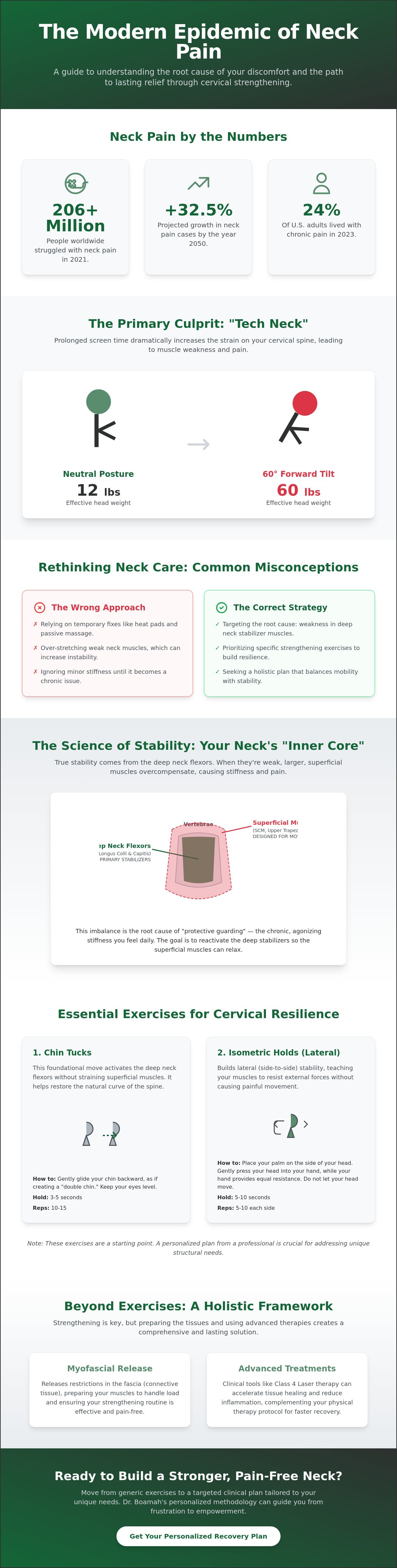
In 2021, over 206 million people worldwide struggled with neck pain, a figure that researchers project will grow by 32.5% by the year 2050. If you are among the 24% of U.S. adults who lived with chronic pain in 2023, you understand how tension headaches and a stiff range of motion can drain your daily energy. It's exhausting to rely on temporary fixes when you're worried about the long-term health of your spine. You deserve a strategy that targets the root cause rather than just masking the ache. Incorporating targeted neck strength exercises into a broader wellness plan is the key to regaining your cervical stability and achieving pain-free workdays.
Dr. Boamah provides the clinical expertise and compassionate partnership you need to navigate this journey toward lasting relief. By combining specific physical therapy protocols with advanced treatments like Class 4 Laser and myofascial release therapy, he helps patients move from frustration to empowerment. In this guide, you'll discover a holistic framework for resolving chronic tension. We'll preview the most effective movements for stability and explain how a personalized, integrative approach can restore your posture and your confidence in your neck's structural integrity.
Key Takeaways
- Identify why surface-level treatments often provide only temporary relief and how targeting the "inner core" of your neck addresses the root cause of tension.
- Learn how to perform specific neck strength exercises like chin tucks and isometric holds to build lateral stability and cervical resilience.
- Understand the vital role of myofascial release therapy in preparing your tissues to handle load, ensuring your strengthening routine isn't hindered by restricted fascia.
- Discover how Dr. Boamah's personalized methodology transitions you from generic exercises to a targeted clinical plan tailored to your unique structural needs.
Beyond the Ache: Why Neck Weakness is a Silent Epidemic in Portland
Portland’s professional landscape is shifting. Between the tech hubs in the Silicon Forest and the academic rigor of our local universities, thousands of residents spend upwards of eight hours a day hunched over digital screens. This modern posture, commonly known as "Tech Neck," places an immense physical toll on the cervical spine. While the human head weighs approximately 12 pounds in a neutral position, leaning forward at a 60-degree angle increases that load to nearly 60 pounds. Over time, this constant strain leads to muscle inhibition, where the body effectively "shuts down" certain stabilizers to protect itself from perceived injury.
Many people try to manage this mounting discomfort with surface-level fixes like heat pads or quick massages. While these provide brief relief, they don't address the underlying weakness that causes the tension to return every Monday morning. This cycle creates deep emotional frustration. Chronic stiffness doesn't just hurt; it limits your focus and kills productivity during the workday. To find a permanent solution, you must move beyond passive care and prioritize specific neck strength exercises that reactivate the deep stabilizers of the spine.
To better understand this concept, watch this helpful video:
The Problem with Procrastinating Neck Care
Ignoring minor stiffness is a risky gamble. What starts as a "crick" in the neck often evolves into chronic cervical spine issues that are much harder to resolve as we age. There is a direct, documented connection between neck instability and the frequency of tension headaches that plague Portland’s workforce. Cervical instability is a clinical state of ligamentous laxity and muscle weakness that occurs as a direct result of prolonged postural kyphosis. By addressing these issues early through The Science of Cervical Stability, you prevent the long-term degradation of your structural integrity.
Stretching vs. Strengthening: The Common Misconception
Most people believe the answer to a tight neck is more stretching. However, if your neck is weak, over-stretching can actually increase pain by destabilizing the joints further. You need a delicate balance of mobility and stability. This is where the physical therapy hillsboro approach becomes essential. Instead of passive relief that only lasts an hour, Dr. Boamah focuses on active support. True resilience comes from neck strength exercises that teach your muscles to hold your head high without effort, providing a foundation for a pain-free life and improved posture.
The Science of Cervical Stability: Understanding Your Deep Neck Flexors
To resolve chronic tension from the root cause, you must understand the "inner core" of your neck. Most people focus on the large, visible muscles they see in the mirror. However, the Longus Colli and Longus Capitis are the true heroes of cervical health. These deep neck flexors sit directly against the front of your cervical vertebrae. They act as the primary stabilizers, maintaining the natural curve of your spine while you move. When these muscles are firing correctly, your head feels light and your movements are fluid. If they are weak, your structural integrity begins to crumble.
When these deep stabilizers fail, superficial muscles like the Sternocleidomastoid (SCM) and the upper trapezius are forced to take over. This is a common neurological compensation. These superficial muscles are designed for powerful, short-term movements, not for the endurance required to hold your head up all day. This overwork leads to "protective guarding," which you experience as that familiar, agonizing stiffness. This imbalance is often exacerbated by Lower Cross Syndrome, where postural issues in the hips and low back create a ripple effect that destabilizes the upper cervical chain. Incorporating neck strength exercises that specifically target these deep layers is the only way to break this cycle of compensation.
Anatomy of a Stable Neck
A stable neck requires a clear, functional relationship between the cervical spine and the thoracic outlet. When your deep flexors are active, they create essential space between the vertebrae. This activation protects your intervertebral discs and delicate nerves from the compression that leads to radiculopathy. Dr. Boamah often uses the "tall spine" concept to help patients visualize this. By tucking the chin slightly and lengthening the back of the neck, you increase neural drive and reduce the "crushing" force on your joints. This isn't just about posture; it's about mechanical safety.
How Weakness Changes Your Neurology
Your neck is a sensory powerhouse. It's packed with proprioceptors that tell your brain exactly where your head is in space. When your stabilizers are weak, this sensory signal becomes "noisy" and unreliable. Your brain loses trust in the neck's integrity and triggers painful muscle spasms as a defense mechanism. Utilizing targeted cervical strengthening exercises helps recalibrate this nervous system response. It teaches your brain that it's safe to move again, effectively "turning off" the pain signals. If you're ready to move beyond temporary relief, you can begin your journey with a holistic assessment to identify your specific neurological weak links. Consistent neck strength exercises are the foundation of this long-term healing process.
6 Essential Neck Strength Exercises for Daily Resilience
Building on the anatomical foundation of the deep flexors, we transition into practical application. These neck strength exercises aren't meant to be heavy-duty lifting; they're precision movements designed to restore the "inner core" of your cervical spine. By focusing on quality over quantity, you can effectively silence the overactive superficial muscles that cause chronic tension. When you perform these movements correctly, you're not just building muscle; you're retraining your neurology to support your head with ease.
- Chin Tucks: This is the gold standard for activating the Longus Colli and Longus Capitis. It reverses the "forward head" posture that characterizes Tech Neck.
- Isometric Side Holds: These build lateral stability without requiring stressful range-of-motion shifts. They're perfect for those with acute sensitivity.
- Prone Cobra: This movement integrates the neck with the upper posterior chain. It teaches the muscles between your shoulder blades to support the base of your neck.
- Scapular Squeezes: Shoulder blade stability is mandatory for neck health. Without a stable base at the scapula, the neck muscles are forced to work twice as hard.
Step-by-Step Exercise Guidance
To perform a Chin Tuck correctly, focus on a subtle "nod" rather than a forceful "pull." Imagine there's a pivot point through your ears; rotate your chin toward your throat while lengthening the back of your skull. For Isometric Holds, use only 20% of your maximum effort. Pushing too hard triggers the jaw to clench and the superficial SCM to take over, which defeats the purpose of the exercise. Maintain a neutral gaze during all isometric contractions to ensure your ocular muscles don't create unnecessary tension.
Progressing Your Routine Safely
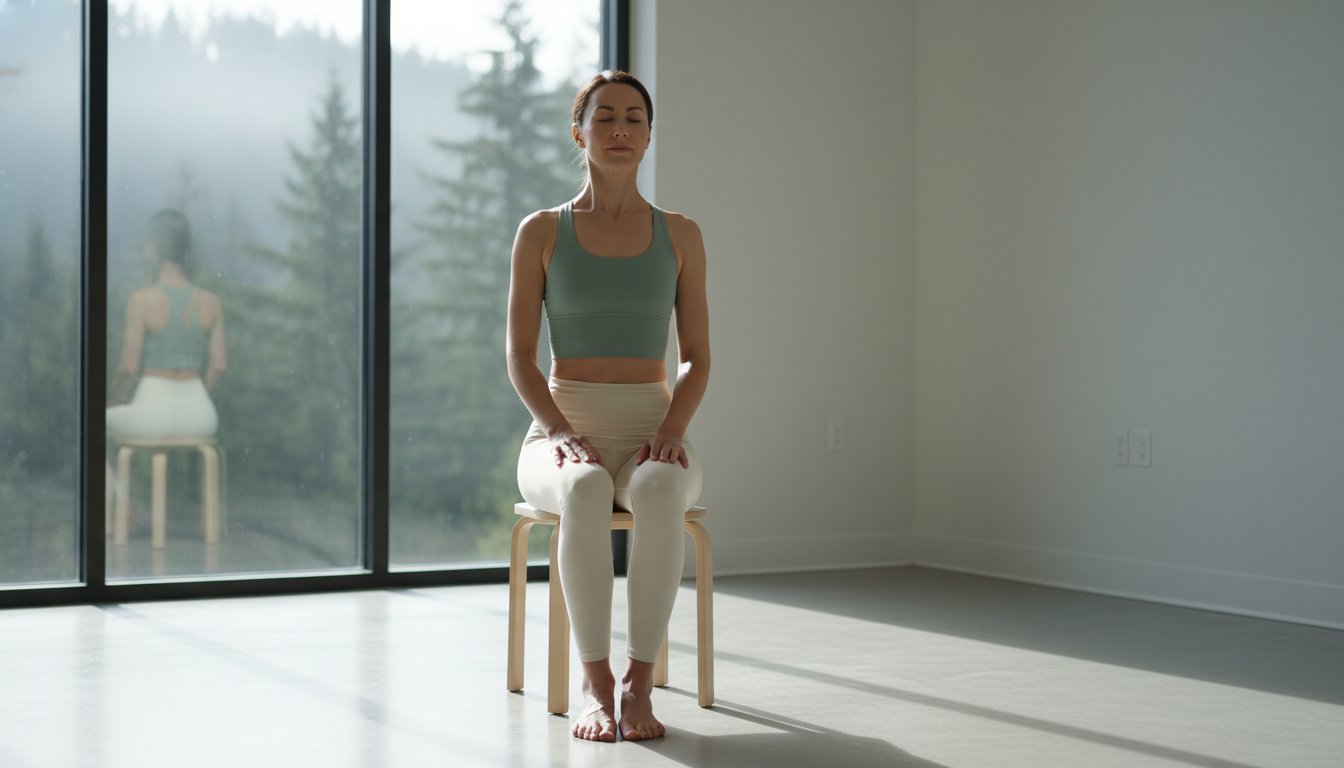
Consistency is your greatest ally on this journey. Begin your practice in a supine position, lying on your back, to remove the effects of gravity. As your stability improves, move to seated and eventually standing variations. You'll know you're overworking if you feel strain in the front of your neck or if your jaw starts to tighten. This is a sign that the superficial muscles are trying to "help." For the best results, remember that 5 minutes of practice twice a day beats one long, exhausting session. Dr. Boamah integrates these movements into comprehensive physical therapy packages to ensure you're progressing at a pace that respects your body’s unique healing timeline.
The Root-Cause Connection: Why Exercises Need Holistic Support
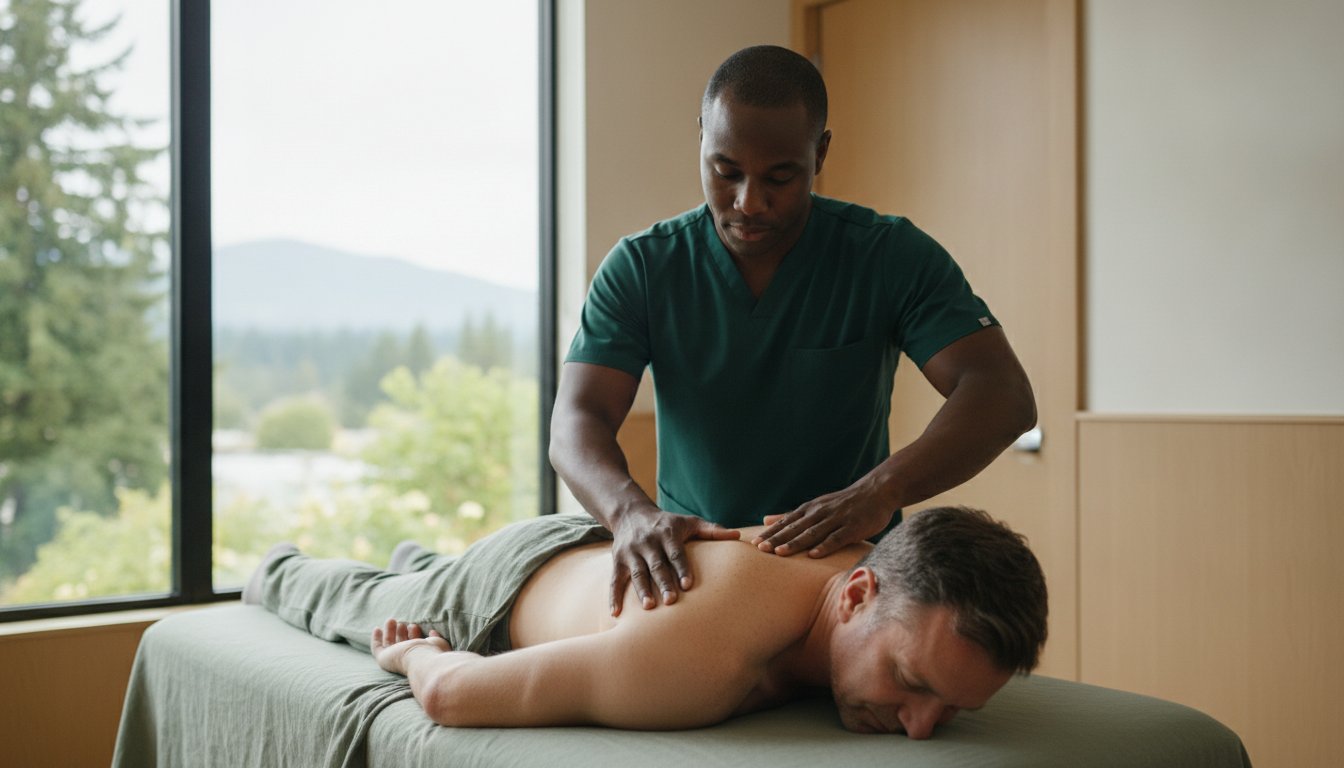
Performing neck strength exercises in a vacuum often leads to plateaued progress. If your myofascial tissue is "locked" or restricted, the muscles you're trying to target simply cannot contract through their full range of motion. This is why Dr. Boamah emphasizes myofascial release therapy as a vital prerequisite for loading. By releasing these structural adhesions, we prepare the tissue to respond to the strengthening stimulus. Without this step, you're essentially trying to strengthen a muscle that's being held in a straitjacket of tight connective tissue.
Beyond physical structure, your internal biochemistry dictates how quickly you recover. Ligaments and tendons need specific fuel. We focus on optimizing levels of Collagen, Vitamin C, and Magnesium to support the structural integrity of the cervical spine. Additionally, systemic inflammation acts as a silent barrier to healing. If you're dealing with undiagnosed food sensitivities, the resulting inflammation can manifest as chronic joint stiffness. This makes even the simplest movements feel laborious. Addressing these systemic factors ensures your body has the raw materials it needs to build a stronger, more resilient neck.
Fascia and the Kinetic Chain
The human body doesn't function in isolated segments. There's a profound connection between the jaw (TMJ), the neck, and even the pelvic floor. A "neck" problem is frequently a symptom of a disruption elsewhere in the kinetic chain. For instance, what a hamstring strain teaches us about overall tension patterns is vital for cervical recovery. If your lower body is unstable, your upper body will often compensate. It tightens the cervical muscles to create a false sense of security. Dr. Boamah investigates these global patterns to ensure your recovery is comprehensive and lasting.
Lifestyle Medicine for Cervical Health
Your environment plays a massive role in your structural health. For those working in a Sylvan Highlands home office, ergonomic adjustments are non-negotiable. Ensure your screen is at eye level to prevent the forward-leaning posture that strains the spine. Stress and shallow, chest-based breathing also force the secondary respiratory muscles in your neck to overwork. This leads to constant tension. Finally, hydration is a critical but overlooked factor. Your intervertebral discs are 80% water; even mild dehydration can reduce their shock-absorbing capacity. To address these factors and optimize your recovery, you should schedule a comprehensive consultation to develop a personalized plan that includes targeted neck strength exercises and holistic support.
Personalized Recovery: Dr. Boamah’s Approach to Neck Strength in Sylvan Highlands
Many Sylvan Highlands residents feel trapped in a cycle of generic virtual care and standard exercise handouts. While movement is vital, a "one-size-fits-all" approach often fails to address the specific structural and systemic barriers unique to your body. You've likely tried various neck strength exercises in the past only to find the stiffness returns by the middle of your work week. At Westridge Holistic medicine, we believe you deserve a partnership that prioritizes your long-term healing over temporary symptom management. We focus on the underlying mechanics that keep you in pain, ensuring your recovery is as unique as your anatomy.
Dr. Boamah acts as a dedicated mentor for his patients, blending high-level clinical authority with a warm, supportive atmosphere. He understands your neck pain isn't an isolated event; it's a complex interaction between your lifestyle, your neurology, and your musculoskeletal system. By combining physical therapy packages with naturopathic primary care, he ensures every aspect of your health is investigated with genuine curiosity. This integrative signature allows us to move beyond simple rehabilitation and into the realm of true structural optimization. It’s about building a body that doesn't just survive the day but thrives through it.
A Root-Cause Diagnostic Journey
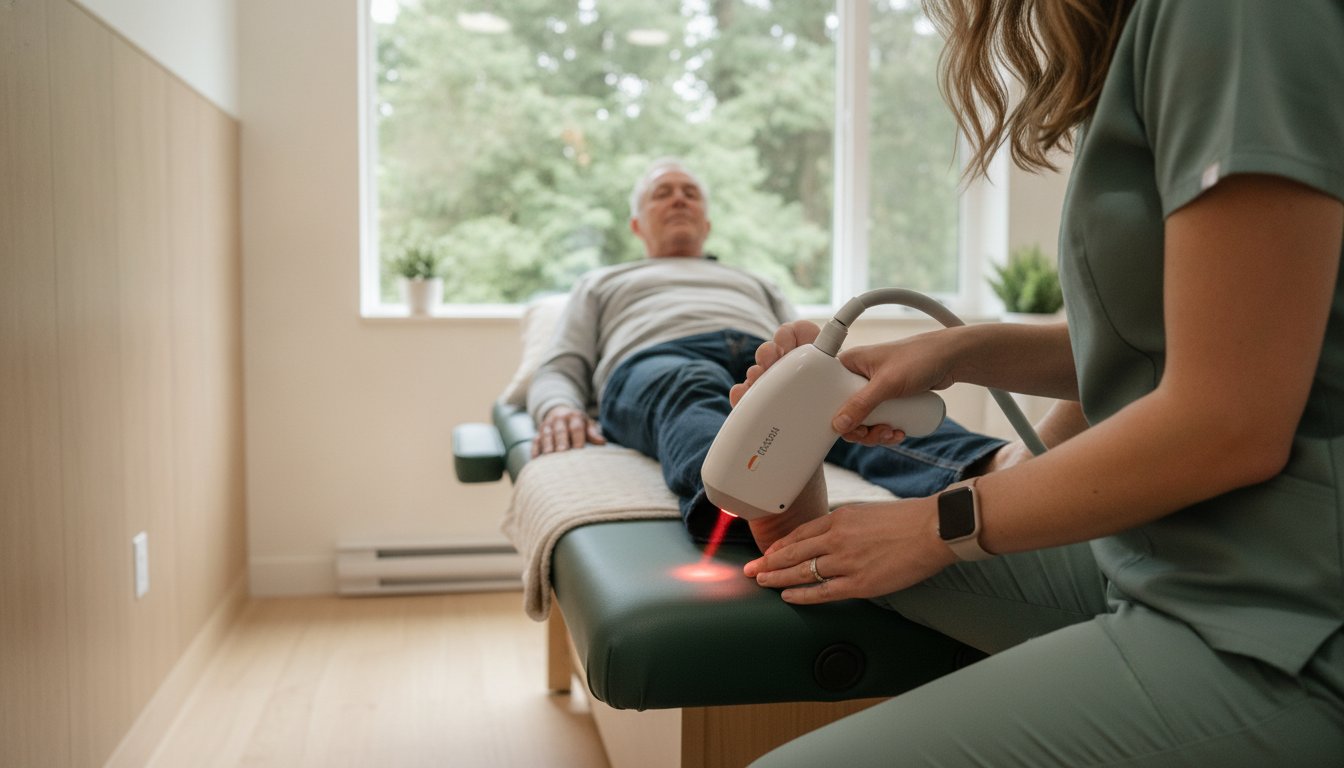
Your initial consultation with Dr. Boamah is a deep-dive investigation into your physical history and current challenges. We don't just look at where it hurts; we look at why the pain persists despite your previous efforts. This diagnostic journey often includes specialized testing to rule out systemic obstacles like chronic inflammation or nutritional deficiencies that might be hindering your progress. Sylvan Highlands residents choose Westridge Holistic medicine because we offer a level of thoroughness that is often missing in conventional care. Whether we're utilizing Class 4 laser therapy to reduce acute sensitivity or performing myofascial release to unlock restricted tissues, every step is designed to make your neck strength exercises more effective and sustainable.
Begin Your Journey to a Pain-Free Life
The transition from managing a "bad neck" to optimizing your structural health is a significant personal milestone. It requires moving away from passive treatments and embracing a proactive, lifestyle-medicine approach. Our goal is to provide you with the confidence that your neck has the structural integrity to handle your busiest workdays and your most active weekends. We invite you to schedule a comprehensive evaluation with Dr. Boamah to identify the specific root causes of your tension. Don't settle for surface-level fixes that leave you feeling unheard and frustrated. Begin your journey toward a pain-free, resilient life by connecting with our team today and taking the first step toward lasting recovery.
Take the Next Step Toward Lasting Cervical Health
Restoring your neck's structural integrity requires more than just stretching or temporary heat pads. You've learned that activating the deep cervical flexors is the foundational step for long-term stability. By shifting your focus toward targeted neck strength exercises, you move from merely managing symptoms to building a resilient foundation that supports your daily life. This journey is most effective when it includes holistic support; it addresses myofascial restrictions and nutritional needs that allow your tissues to heal from the root cause.
Expert care by Dr. Boamah ensures that your recovery plan is as unique as your anatomy. His approach integrates root-cause focused physical therapy with comprehensive naturopathic primary care, providing a steady path toward pain-free productivity. You don't have to navigate chronic tension alone. With the right investigative methodology and personalized guidance, you can regain confidence in your body's strength and reclaim the activities you love. Begin your journey to root-cause healing and schedule a consultation with Dr. Boamah today. We're ready to help you rediscover the freedom of effortless movement.
Frequently Asked Questions
How do I know if my neck muscles are weak or just tight?
Distinguishing between the two involves checking your response to mobility work. If stretching provides relief for only 30 minutes before the ache returns, you're likely dealing with a stability deficit. Your brain creates "false tightness" to protect the joints. Implementing neck strength exercises allows the nervous system to let go of that defensive tension by providing the structural support it craves.
Can neck strength exercises help reduce chronic tension headaches?
Strengthening the cervical chain is a primary defense against recurrent headaches. By stabilizing the upper vertebrae, you reduce the mechanical stress on the suboccipital nerves. This prevents the "vice-like" grip often felt during long workdays in Portland. Strengthening provides a durable buffer against the postural triggers that usually lead to a migraine or tension-type episode.
Are these exercises safe if I've been diagnosed with a bulging disc?
Safety depends on the direction of the bulge, but stability is almost always the clinical goal. Strengthening the deep flexors helps pull the vertebrae into better alignment, which can alleviate pressure on the nerve root. Always consult with Dr. Boamah first to ensure your neck strength exercises don't involve end-range positions that could exacerbate the disc protrusion during your recovery.
How long does it take to see improvements in posture and pain levels?
Postural awareness often shifts within the first 14 days as your motor control improves. You'll likely notice you're "catching" yourself slouching more frequently during the day. However, physiological changes in tendon density and muscle endurance typically take 60 to 90 days of consistent effort. True, lasting relief is a marathon of small, daily wins rather than a quick sprint.
What is the difference between neck stretching and neck strengthening?
Stretching aims to increase the range of motion, while strengthening ensures you can actually control that range. Many people with chronic pain are already "hypermobile" in certain segments of their neck. Adding more stretching to an unstable joint can be counterproductive. Strengthening creates the necessary tension to keep your spine safe during dynamic daily movements.
Can Dr. Boamah help if I've already tried traditional physical therapy without success?
Westridge Holistic medicine specializes in complex cases where standard protocols have plateaued. Traditional physical therapy often ignores the systemic barriers to healing, such as nutritional deficiencies or myofascial adhesions. Dr. Boamah integrates advanced diagnostics with hands-on care to clear the path for your body’s natural healing process, ensuring your exercises finally produce the results you expect.
Is it possible to overtrain my neck muscles?
You can certainly overwork these delicate muscles if you aren't careful. Unlike your quadriceps, the neck stabilizers are built for endurance and precision, not maximum power. If you experience increased dizziness, jaw clenching, or a spike in headache frequency, it's a sign to scale back. We focus on low-load, high-quality repetitions to build resilience without overstimulating the nervous system.
Do I need special equipment to perform neck strength exercises at home?
Most of the foundational movements require nothing more than a flat surface and your own body weight. Gravity is your primary tool when starting in a supine position. As you advance, we might incorporate simple household items or light resistance bands, but the effectiveness of the routine lies in your precision and consistency rather than expensive gym machinery.
Disclaimer
for educational purposes only